10 Best Incident Management Software Platforms in 2026
10 Best Incident Management Software Platforms in 2026
The best incident management software helps frontline teams report problems quickly, gives managers a consistent response process, and creates evidence that an incident was resolved—not merely recorded. For organizations with stores, facilities, security posts, cleaning teams, maintenance crews, and other distributed operations, that means mobile reporting, clear ownership, photos, location context, workflow visibility, and reliable follow-up.
This guide compares 10 strong platforms for operational and workplace incident management. It is not a ranking of IT outage tools such as PagerDuty or Opsgenie, and it does not cover cybersecurity incident response platforms. The products below are intended for real-world events: safety hazards, security events, equipment failures, cleaning issues, property damage, customer incidents, near misses, and other exceptions that require action.
Disclosure: TARGPatrol publishes this comparison and is included as one of the products. We used public product and pricing information available in August 2026, applied the same evaluation criteria to every platform, and state where a product serves a narrower or broader use case. Pricing and packaging can change, so confirm final terms with each vendor.
How We Evaluated Incident Management Software
We prioritized the capabilities that determine whether an operational incident reaches a verified outcome across one site or hundreds of locations:
Frontline reporting: Can an employee create a useful report on a phone with minimal friction?
Evidence capture: Can reports include photos, files, comments, timestamps, and location context?
Workflow and ownership: Can teams assign responsibility, set priority, change status, and see what happens next?
Investigation and corrective action: Does the platform support follow-up, root-cause analysis, or linked actions appropriate to its target market?
Multi-site control: Can regional and head-office teams monitor incidents across locations without losing local accountability?
Notifications and escalation: Can the right people be alerted when incidents are created, updated, delayed, or closed?
Reporting and integration: Are dashboards, exports, APIs, or webhooks available for management and connected systems?
Fit and value: Is the product appropriately sized and priced for the problem it claims to solve?
Quick Comparison: The Best Incident Management Software for 2026
Platform | Best for | Mobile reporting | Starting price | Important limitation |
|---|---|---|---|---|
TARGPatrol | Distributed operational teams | Yes | Free up to 10 users | Not an ITSM or full EHS compliance suite |
SafetyCulture | Inspection-led safety and issue reporting | Yes | Free plan; paid from $24/user/month annually | Costs rise with larger frontline teams |
Intelex | Enterprise EHS incident programs | Yes, including offline | Custom quote | More implementation and administration |
Cority | Large multi-site EHS and compliance teams | Yes, including offline | Custom quote | Can be excessive for simple operational reporting |
Resolver | Corporate security and investigations | Yes | Custom quote | Enterprise-oriented complexity |
EcoOnline | Workplace safety participation | Yes | Custom quote | Best value usually comes from the broader EHS suite |
HSI Donesafe | Configurable modular EHSQ workflows | Yes | Custom quote | Pricing depends on modules and workforce |
EHS Insight | OSHA-focused incident and safety management | Yes, including offline | From $5,000/year | Higher entry point for small teams |
MaintainX | Equipment failures and maintenance follow-up | Yes | Free plan; paid from $20/user/month annually | Not a general incident case-management system |
Connecteam | Simple mobile forms plus workforce operations | Yes | Free for up to 10; paid from $29/month annually | Forms-led rather than a dedicated incident lifecycle |
Price note: starting prices are based on publicly listed annual billing where available and may exclude implementation, add-ons, minimum contracts, or taxes. Custom enterprise prices require a vendor quote.
What to Look For Before You Choose
Start with the way incidents actually happen in your organization. A security officer may need to report an event during a patrol. A cleaner may discover damage while completing a checklist. A technician may identify an equipment problem during planned work. The software should preserve that operational context while making reporting fast enough that people will use it.
Then evaluate the complete lifecycle. A form builder can collect a report, but incident management also requires ownership, prioritization, response, evidence, communication, verification, and management visibility. If regulatory investigations, injury records, claims, or formal root-cause methodologies are mandatory, choose a dedicated EHS platform. If your main challenge is coordinating everyday exceptions across locations, a lighter operational platform may deliver better adoption and faster value.
1. TARGPatrol — Best Overall for Distributed Operational Teams
Best for: Retail, security, cleaning, maintenance, facility management, hospitality, and other multi-location teams that need mobile incident reporting connected to daily work.
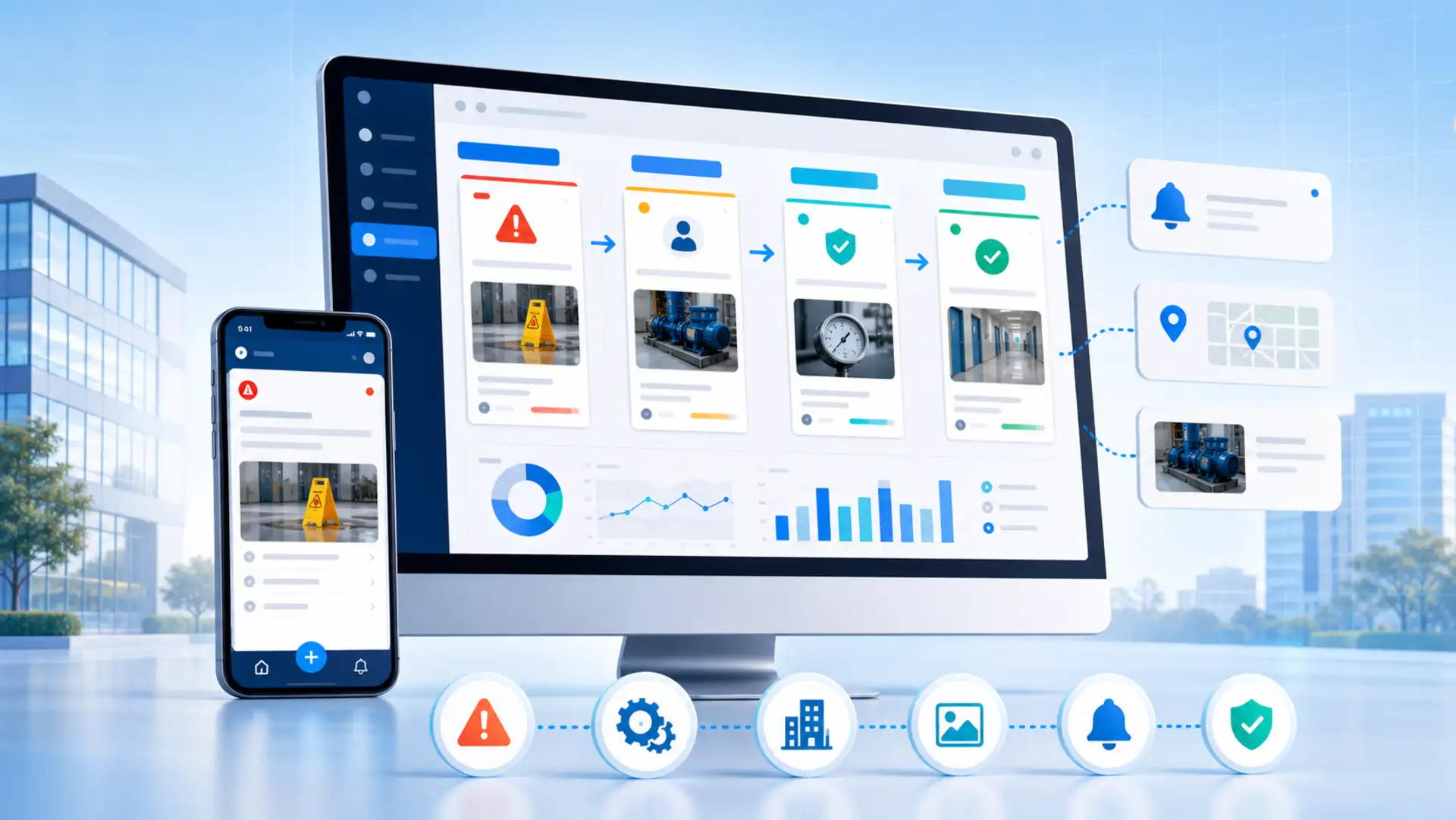
TARGPatrol Incidents is designed around a practical frontline-to-manager workflow. Employees can register an incident directly from the mobile app or while completing a task, checklist, inspection, or patrol. Managers receive structured information, assign responsibility, move the report through a configurable process, and verify the result from one shared workspace.
That connection to daily operations is TARGPatrol’s main advantage. A cleaning issue can be reported during a quality check, a maintenance fault during scheduled work, and a security event during a patrol—without forcing employees into a separate enterprise case-management system. Incident Types, Categories, and creation forms keep reports consistent across roles and locations.
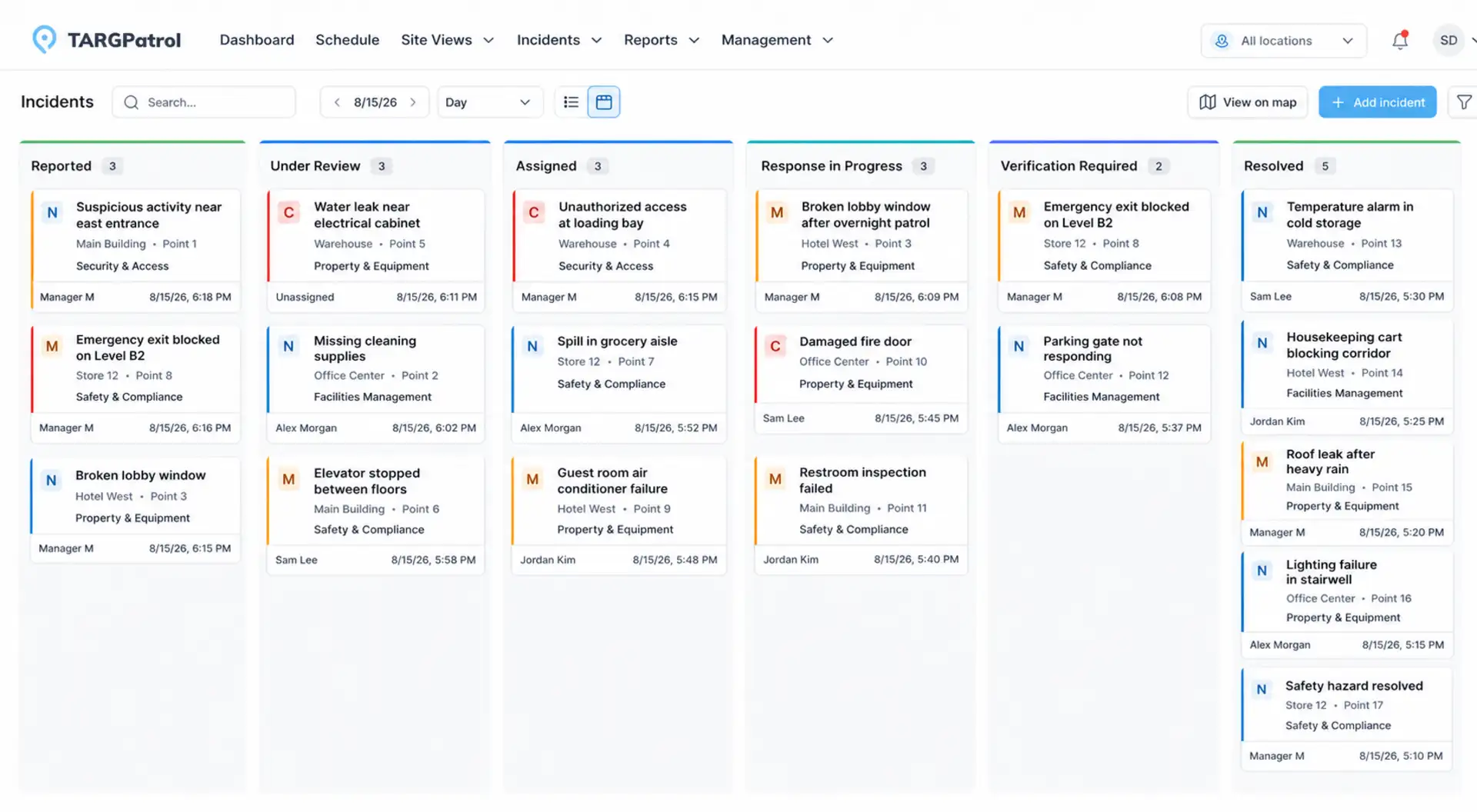
TARGPatrol’s Kanban view gives managers a clear picture of new, assigned, in-progress, verification, and completed incidents across locations.
Key capabilities
Standalone mobile incident creation or reporting in the context of a task, checklist, inspection, or patrol.
Configurable Incident Types, Categories, fields, priorities, assignees, and workflow states.
Photo and file evidence, comments, timestamps, location or Point context, GPS coordinates, and full change history.
List and Kanban views for triage, ownership, progress monitoring, and verification.
Notification rules for new incidents and important workflow changes.
Multi-location access controls, dashboards, reports, and exports for local and regional management.
External API and webhooks for connecting incidents to other operational systems.
Pricing
TARGPatrol has a free plan for up to 10 users. The Base plan starts at $15 per month on monthly billing or $12 per month on annual billing, with Enterprise pricing available for larger or more complex deployments. See the current TARGPatrol pricing.
Important limitation
TARGPatrol is an operational work and incident management platform, not an IT service-management system and not a full enterprise EHS compliance suite. Organizations that require claims administration, specialized occupational-health records, formal regulatory filing, or advanced investigation methodologies may need Intelex, Cority, Donesafe, or a connected specialist system.
2. SafetyCulture — Best for Inspection-Led Safety and Issue Reporting
Best for: Organizations already using inspections that want staff to raise issues, hazards, and observations from the same mobile environment.
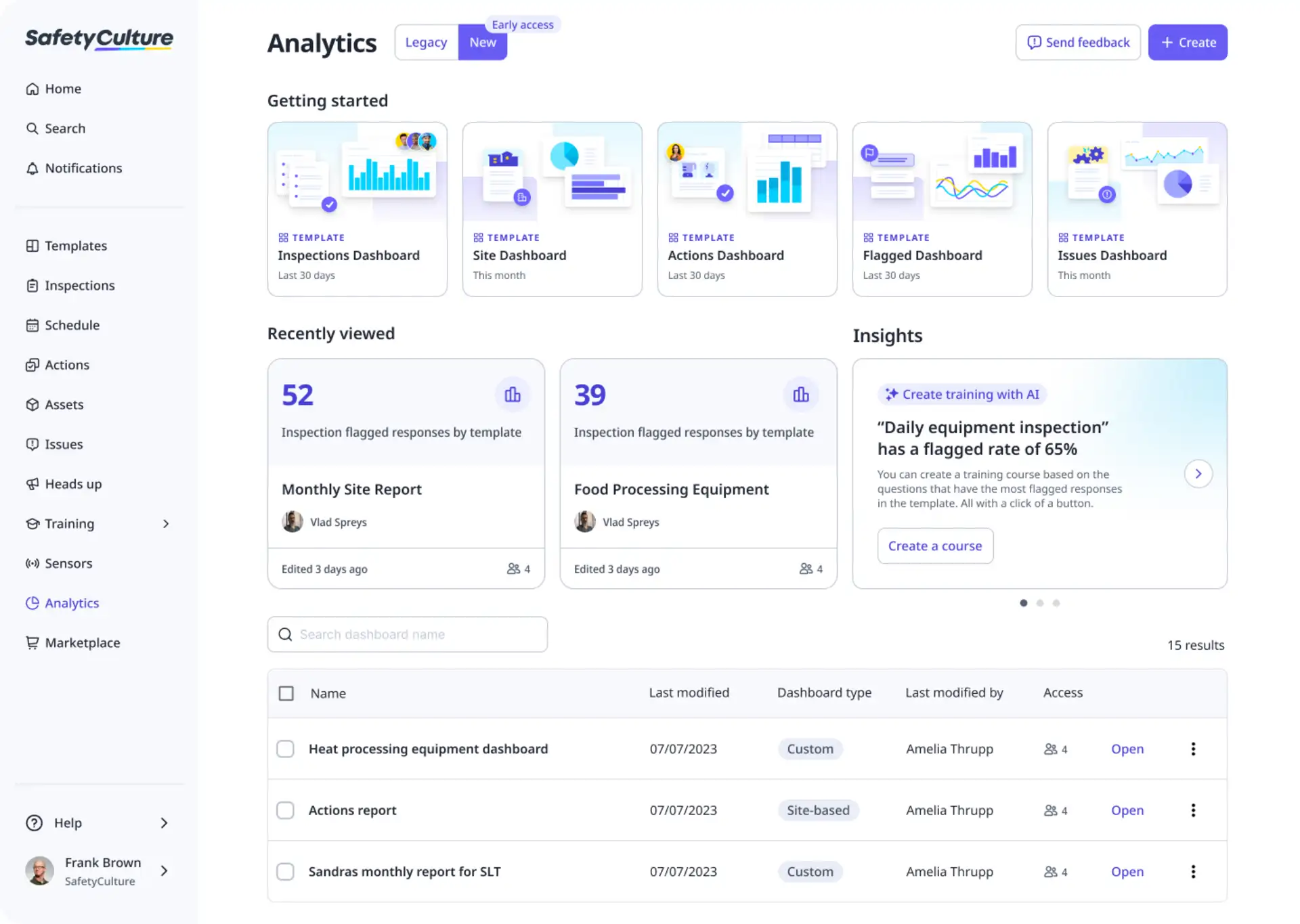
SafetyCulture combines inspections, issue reporting, actions, training, and operational visibility. Frontline employees can submit issues from a phone with photos, video, notes, and location details, while managers can notify teams, investigate events, and assign follow-up actions.
Key capabilities
Mobile issue and observation reporting with photo, video, and location evidence.
Issues created independently or from inspection findings.
Notifications, assigned actions, comments, and status tracking.
Investigations and OSHA-related reporting options for safety use cases.
Dashboards and analytics across sites and teams.
Pricing
The free plan supports up to 10 users with limited templates and basic issue management. Premium is listed at $24 per user per month with annual billing or $29 with monthly billing; a 30-day Premium trial is available. Enterprise pricing is custom.
Important limitation
SafetyCulture is strongest when incidents are closely connected to inspections and a wider safety program. Per-user pricing can become significant for a large frontline workforce, and organizations seeking a highly customized enterprise investigation system may need a more specialized EHS platform.
3. Intelex — Best for Enterprise EHS Incident Programs
Best for: Large organizations that need configurable incident investigations, regulatory reporting, corrective actions, and enterprise EHS governance.
Intelex provides a dedicated EHS incident management application for incidents, injuries, illnesses, environmental events, near misses, and related corrective actions. Mobile and offline capture supports field reporting with geolocation, photos, and voice notes, while configurable workflows support investigations, root-cause analysis, approvals, and regulatory outputs.
Key capabilities
Configurable forms and workflows for multiple incident types.
Mobile and offline reporting with geolocation and multimedia evidence.
Investigation, root-cause analysis, corrective actions, and approvals.
Dashboards, metrics, trend analysis, and multi-site oversight.
Support for OSHA, RIDDOR, and other EHS reporting requirements.
Pricing
Intelex does not publish standard incident-management pricing. Packages are quoted based on applications, users, implementation, and organizational requirements; prospects can request a demonstration or trial access.
Important limitation
This depth comes with enterprise-level configuration, procurement, and rollout effort. Intelex can be more platform than a smaller operations team needs when the goal is simply to capture incidents, coordinate response, and verify completion.
4. Cority — Best for Large Multi-Site EHS and Compliance Teams
Best for: Global or highly regulated organizations that need incident management inside a broad EHS and sustainability platform.
Cority supports mobile-first reporting, configurable incident workflows, investigations, corrective and preventive actions, root-cause analysis, and enterprise reporting. Offline mobile capture is valuable at remote facilities, while CorityOne connects incident data to audits, compliance, occupational health, environmental programs, and other EHS processes.
Key capabilities
Mobile and offline event capture across sites.
Severity assessment, routing, investigations, and configurable workflows.
Corrective and preventive actions with accountability and due dates.
Root-cause analysis and cross-site trend reporting.
Integration with the wider CorityOne EHS platform.
Pricing
Cority uses custom enterprise pricing. Final cost depends on the modules, workforce, integrations, services, and deployment scope selected.
Important limitation
Cority is built for mature EHS programs and can require substantial implementation and change management. Teams with a straightforward operational incident workflow may find a focused product faster to deploy and easier for frontline adoption.
5. Resolver — Best for Corporate Security and Complex Investigations
Best for: Corporate security, loss prevention, risk, and investigation teams handling sensitive cases and connected entities.
Resolver is oriented toward security operations and investigation-grade incident management. It supports centralized intake, triage, routing, response playbooks, cases, evidence, entity relationships, role-based access, audit trails, dashboards, and integrations. This makes it a strong fit when an incident may develop into a formal investigation involving people, locations, assets, or repeat patterns.
Key capabilities
Centralized incident intake, triage, prioritization, and routing.
Investigation cases, evidence, notes, tasks, and linked entities.
Response plans and workflows for security and operational events.
Role-based access, auditability, dashboards, and risk reporting.
Integration options and an open API for connected security systems.
Pricing
Resolver pricing is provided through a custom quote based on product configuration and organizational scope.
Important limitation
Resolver’s investigation and security depth is a benefit for complex risk programs but may add cost and complexity for teams that mainly need fast frontline reporting and a simple visible resolution workflow.
6. EcoOnline — Best for Workplace Safety Participation
Best for: Safety teams that want to make hazard, near-miss, and incident reporting accessible to the whole workforce.
EcoOnline focuses on encouraging participation in workplace safety. Employees can report accidents, hazards, and near misses through mobile access, QR codes, or anonymous reporting options. Safety teams can investigate causes, assign remedial actions, monitor completion, and analyze patterns as part of the wider EcoOnline EHS platform.
Key capabilities
Accessible reporting for incidents, hazards, accidents, and near misses.
Mobile, QR-based, and anonymous submission options.
Investigations, root-cause work, and remedial actions.
Notifications, dashboards, and safety trend analysis.
Connections to broader risk and EHS management capabilities.
Pricing
EcoOnline provides custom pricing based on the selected EHS capabilities and deployment size.
Important limitation
The strongest business case is usually for organizations adopting several EcoOnline safety capabilities. A company seeking only a compact operational incident workflow should compare the cost and implementation scope carefully.
7. HSI Donesafe — Best for Configurable Modular EHSQ Workflows
Best for: Organizations that want to assemble incident, investigation, corrective action, and other EHSQ modules around their own processes.
HSI Donesafe is a no-code EHSQ platform with a dedicated incident module. It can capture injuries, illnesses, environmental events, spills, property damage, vehicle incidents, and near misses, then route them through configurable workflows. Investigation tools include root-cause methods such as 5 Whys and ICAM, with corrective actions and management reporting available across the system.
Key capabilities
Mobile incident and near-miss reporting with configurable forms.
No-code workflows, approvals, notifications, and escalation.
Investigations, 5 Whys, ICAM, and corrective actions.
Dashboards and reports across locations and incident categories.
Modular EHSQ platform for expanding beyond incident management.
Pricing
HSI Donesafe uses custom pricing based on workforce size, chosen modules, implementation, and service requirements.
Important limitation
The modular model is flexible but requires deliberate configuration and package selection. Buyers should define which investigation and compliance processes are essential before requesting a quote.
8. EHS Insight — Best for OSHA-Focused Incident and Safety Management
Best for: US-focused safety programs that need incident investigation, corrective actions, OSHA recordkeeping, and offline field reporting.
EHS Insight combines incident reporting, near-miss capture, investigations, root-cause analysis, corrective actions, and OSHA reporting. Its mobile app supports offline work, and incident information can connect to audits, training, compliance tasks, and other modules in the broader EHS platform.
Key capabilities
Mobile and offline incident, injury, illness, and near-miss reporting.
Investigations, root-cause analysis, and corrective actions.
OSHA logs and regulatory reporting support.
Dashboards, trends, alerts, and multi-site reporting.
A broad catalog of connected EHS modules.
Pricing
EHS Insight lists small and medium business packages from $5,000 per year. Pricing varies by employee count and modules, and a two-week trial is available.
Important limitation
The annual entry point may be high for a small operational team, especially when formal EHS compliance functionality is not required.
9. MaintainX — Best for Equipment Failures and Maintenance Corrective Work
Best for: Maintenance and reliability teams whose “incidents” are primarily asset failures, procedure exceptions, and follow-up work orders.
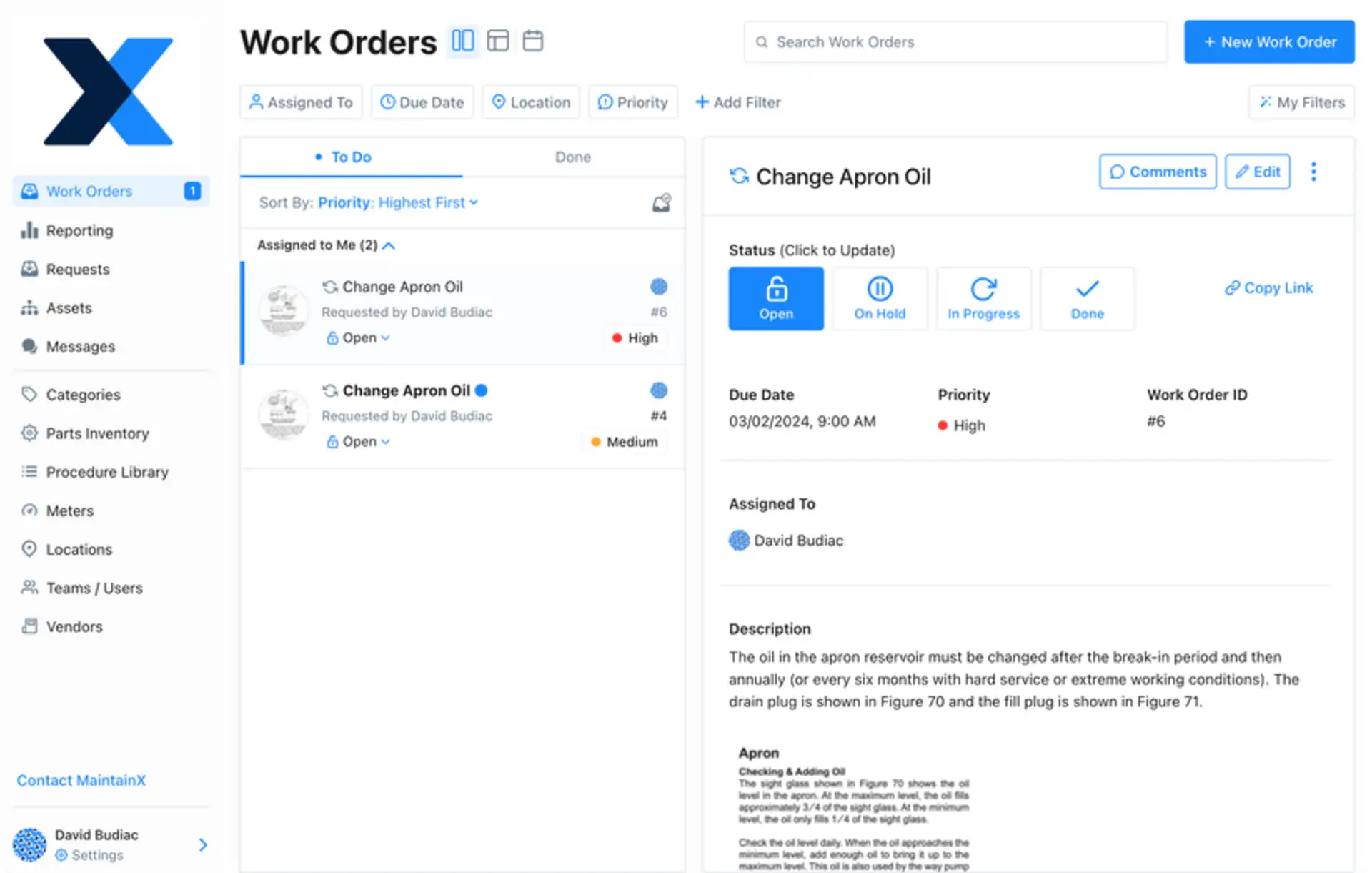
MaintainX is a computerized maintenance management system rather than a general incident case-management platform. It is highly relevant when an incident should immediately become maintenance work: employees can report a problem, create or assign a work order, follow a procedure, attach evidence, track downtime, and analyze recurring asset failures. Enterprise capabilities include root-cause analysis reporting and multi-site controls.
Key capabilities
Mobile work requests and work orders with photos, comments, and status.
Corrective actions triggered by failed procedure steps or inspection flags.
Asset history, downtime tracking, parts, and maintenance reporting.
Preventive maintenance and repeatable digital procedures.
Root-cause and multi-site capabilities in higher-tier packages.
Pricing
MaintainX offers a free Basic plan. Essential starts at $20 per user per month with annual billing ($25 monthly), Premium at $65 per user per month annually ($75 monthly), and Enterprise pricing is custom.
Important limitation
MaintainX is the right choice for maintenance-driven events, but it is not designed as a broad incident system for security investigations, employee safety cases, customer incidents, or cross-department operational exceptions.
10. Connecteam — Best for Simple Mobile Forms Plus Workforce Operations
Best for: Small and midsize deskless teams that want incident forms alongside scheduling, communications, time tracking, and daily workforce management.
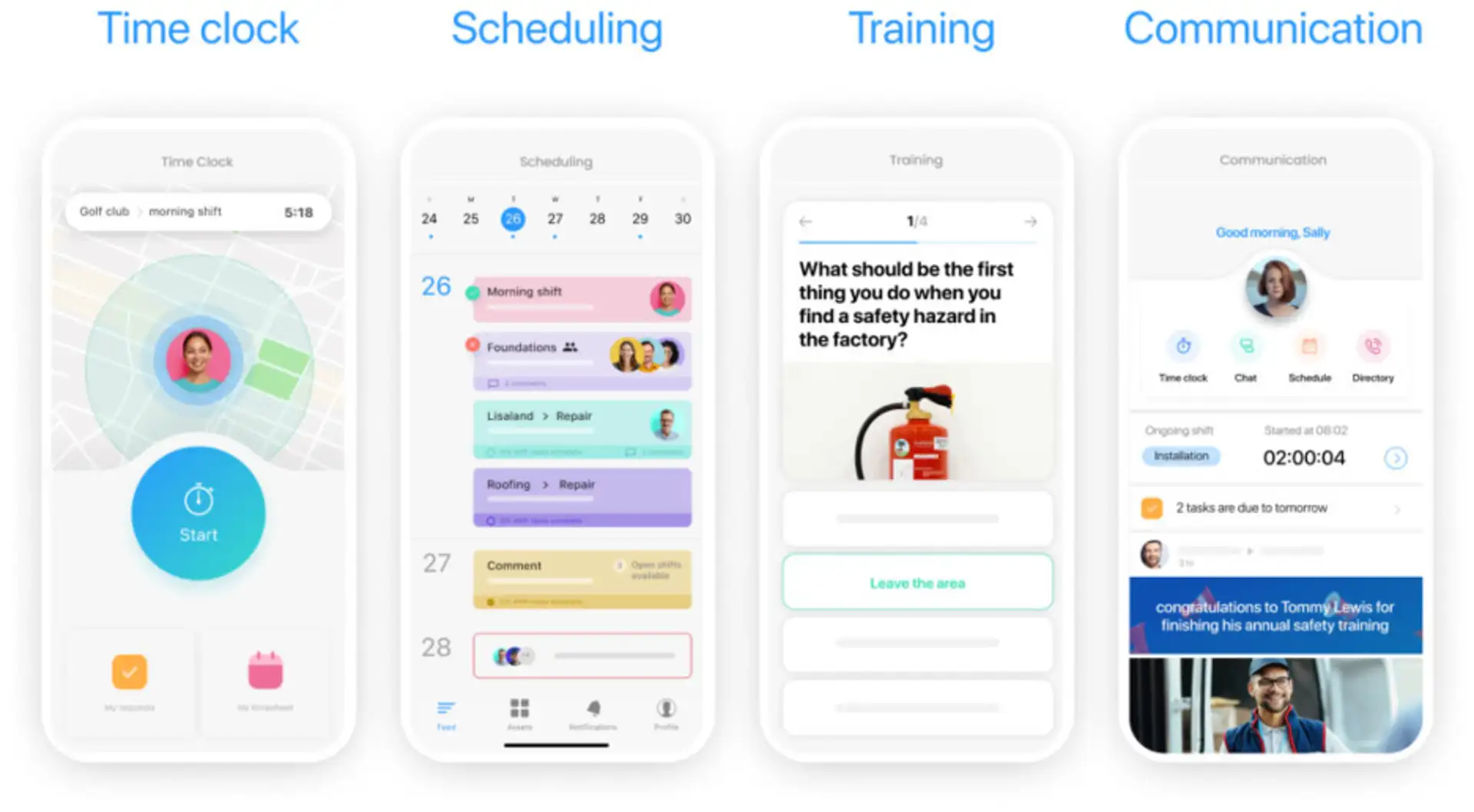
Connecteam lets teams build mobile incident and safety forms with required fields, photos, signatures, and location information. Submissions can notify managers and support follow-up within a broader workforce platform that also covers scheduling, time clocks, tasks, updates, and training.
Key capabilities
Custom mobile incident, hazard, and safety forms.
Photos, signatures, timestamps, and location-related form evidence.
Manager notifications and organized submission records.
Safety communications, training, tasks, and workforce operations.
Accessible pricing for small teams, including a 10-user plan.
Pricing
Connecteam has a Small Business plan for up to 10 users. For the Operations hub, Basic starts at $29 per month with annual billing ($35 monthly) for the first 30 users, Advanced at $49 annually ($59 monthly), and Expert at $99 annually ($119 monthly). A 14-day trial is available.
Important limitation
Connecteam is forms-led rather than a dedicated incident lifecycle system. Teams needing configurable incident states, investigation cases, complex corrective actions, or specialized EHS compliance should evaluate a more focused product.
Which Incident Management Platform Should You Choose?
Choose TARGPatrol when incidents happen during real frontline work and you need mobile reporting, configurable workflows, Kanban visibility, evidence, and multi-location oversight without enterprise EHS complexity.
Choose SafetyCulture when inspections are the center of your operational and safety program.
Choose Intelex or Cority when regulatory EHS governance, formal investigations, and enterprise deployment depth are mandatory.
Choose Resolver when corporate security, sensitive investigations, linked entities, and case controls matter most.
Choose EcoOnline, HSI Donesafe, or EHS Insight when workplace safety participation, investigations, corrective action, and EHS modules are the priority.
Choose MaintainX when most incidents are equipment failures that should become maintenance work orders.
Choose Connecteam when basic incident forms are one small part of a broader workforce-management requirement.
Incident Management Software Buying Checklist
Map your current incident lifecycle from first report to verified closure.
Test how many taps a frontline employee needs to submit a useful mobile report.
Confirm whether incidents can be created during tasks, inspections, patrols, or maintenance work.
Define the evidence you need: photos, files, signatures, comments, timestamps, GPS, and location or asset context.
Check whether statuses, priorities, categories, permissions, and notification rules match your operating model.
Test multi-site dashboards, filters, exports, and access for local, regional, and head-office managers.
Verify API and webhook coverage before committing to integrations.
Run a pilot with real frontline employees and measure reporting speed, data quality, response time, and closure rate.
Frequently Asked Questions
What is incident management software?
Incident management software captures an unexpected event, routes it to the right people, records evidence and communication, tracks investigation or corrective work, and provides proof of closure. Operational examples include safety hazards, security events, equipment failures, cleaning problems, property damage, customer incidents, and near misses.
What is the difference between incident reporting and incident management?
Incident reporting records what happened. Incident management continues through triage, ownership, response, investigation where needed, corrective action, verification, closure, and trend analysis. A digital form alone may improve reporting but does not necessarily manage the full lifecycle.
Is operational incident management the same as IT incident management?
No. IT incident management restores software, infrastructure, or digital services after an outage. Operational incident management handles events involving people, physical sites, assets, safety, security, service quality, and field work. Some organizations need both categories, but they usually require different workflows and products.
Can employees report incidents from a mobile phone?
Yes. Every product in this comparison supports mobile reporting in some form. The important difference is context: some platforms use a standalone form, while TARGPatrol can also register an incident while an employee is completing a task, checklist, inspection, or patrol.
How much does incident management software cost?
Entry-level operational products can be free for small teams or start around $12–$29 per month. Per-user products commonly begin around $20–$24 per user per month. Dedicated enterprise EHS and investigation systems usually use custom annual contracts and may include implementation, configuration, training, and integration fees.
Can TARGPatrol replace an enterprise EHS platform?
TARGPatrol can replace spreadsheets, chats, paper forms, and disconnected operational reporting for many multi-location teams. It is not intended to replace specialist occupational-health, claims, regulatory filing, or advanced EHS investigation systems when those functions are mandatory. In those cases, TARGPatrol can manage frontline operational work and connect to other systems through its API and webhooks.
Related TARGPatrol Guides
Final Verdict
There is no universal incident management platform for every organization. Enterprise EHS suites lead when compliance and formal investigations dominate. Resolver is stronger for investigation-heavy security programs. MaintainX is better when failures belong inside a maintenance system, and Connecteam is sufficient when a mobile form is all the team needs.
For distributed operational teams, TARGPatrol offers the most balanced combination of fast mobile reporting, task and inspection context, configurable workflows, Kanban control, photo and location evidence, multi-site monitoring, and accessible pricing. Explore the product tour or start with the free plan to test the complete report-to-verification process with your own frontline team.