Events
 2/25/2026
Planning Event Budget Checklist
Event budgets fail when costs are tracked too late and decisions are made without a clear baseline. The Event Budget Planning Checklist turns budgeting into a structured workflow — revenue assumptions, cost categories, vendor quotes, payment schedules, cash flow, contingency reserves, and plan-vs-actual control. It helps teams build a realistic budget early, protect margins, and prevent “silent” overspend from deposits, add-ons, and last-minute changes.
The checklist is designed for real production conditions. It aligns event owners, procurement, and finance around concrete, verifiable steps: itemized quotes, approvals and thresholds, deposits and due dates, platform fees, staffing hours, and risk buffers for weather, overtime, or inflation. Each line item has an owner and a tracking method, so the budget stays actionable — not a spreadsheet that’s updated once a month.
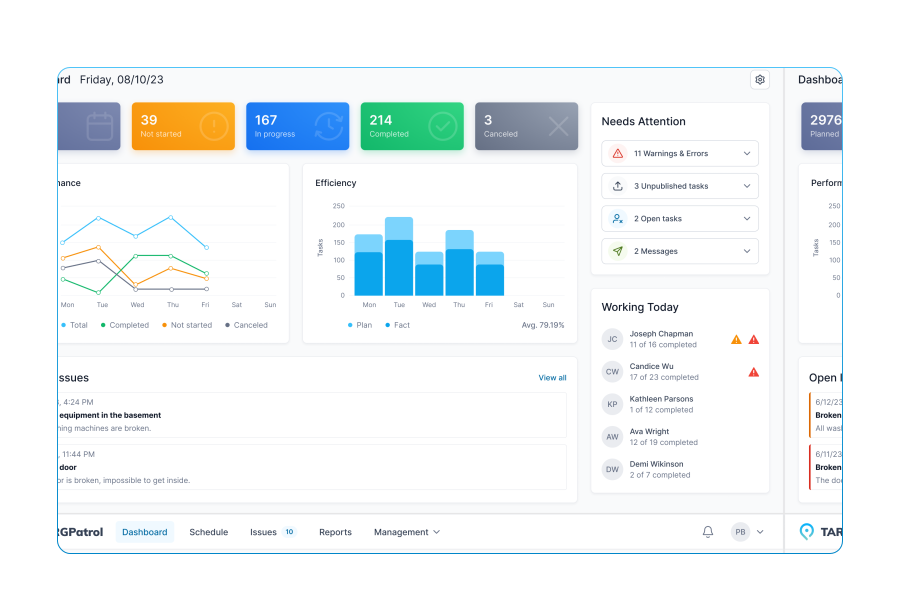
You can use the checklist as a printable PDF during planning meetings and vendor reviews, or run it in a mobile event management app to assign responsibilities, track completion in real time, and capture notes or photos as evidence — such as signed quotes, invoice confirmations, or on-site spend approvals. This makes handovers between teams reliable and creates an audit trail for every commitment.
After the event, the same checklist supports reconciliation: collecting invoices, closing payments, matching revenue reports to bank totals, and producing a clear plan-vs-actual summary. Over time, it becomes a reusable standard that improves forecasting accuracy, speeds up financial close, and keeps every event financially controlled from first estimate to final report.

Event name / project code

Budget owner (name + role)
Budget version (Draft / Approved / Final)
Budget period (start–end)
Currency
Target margin / surplus (%)

Budget approval deadline
Key assumptions documented

Expected attendance (guests)
Event format (in-person / hybrid / online)
Revenue streams listed
Ticket strategy defined
Ticket prices entered in budget model
Projected tickets sold by tier (qty)
Refund policy cost impact estimated
Sponsorship packages & pricing defined
Sponsor pipeline value and probability set
Vendor/booth fees defined
Merch sales forecast (units + price)
Other revenue sources documented
Revenue timing mapped
Venue rental cost confirmed (quote/contract)
Deposit amount and due date recorded
Included services reviewed
Additional venue fees captured
Permits and licenses fees budgeted
Insurance costs budgeted
Power/internet/rigging charges included
Audio/visual quote received and itemized
Lighting/staging/truss costs included
Streaming / recording costs included (if hybrid/online)
Equipment rentals listed (radios, scanners, laptops, printers)
Set design / décor budget included
Printing & signage costs included
Power backup / generators included (if needed)
Catering quote itemized
Expected guest count for catering aligned to attendance
Water/coffee/snacks budgeted (crew + guests)
Dietary requirements budgeted (vegan/allergens/halal etc.)
Bar/alcohol costs budgeted (if applicable)
Waste management costs included
Restroom rentals/service budgeted (if applicable)
Talent/speaker fees confirmed
Travel budget (flights/rail) included
Accommodation budget included
Per diem / hospitality budget included
Riders/technical requirements costed
Contracts issued to talent/vendors
Event staffing plan defined
Internal labor costed (rates + hours)
Freelancers/agency staff costed
Security quote included
Medical/first-aid coverage cost included
Cleaning crew costs included
Transport/logistics crew costs included
Branding/creative production budgeted
Website/landing page costs included
Ticketing platform fees included (%, fixed, payment processing)
Paid media budgets set (search/social/display)
PR/media outreach costs included
Content production budgeted (photo/video)
Influencer/partner commissions budgeted (if applicable)
Printed materials budgeted (flyers, banners, badges)
Transportation/shipping costs included
Storage costs included (pre/post event)
On-site supplies budgeted
IT/communications costs included
Staff meals / green room / crew snacks budgeted
Accommodation for staff budgeted (if travel event)
Contingency % set and justified
Weather contingency budgeted (tents, heaters, flooring, rain plan)
Currency/price inflation buffer applied (if relevant)
Critical single-point-of-failure costs flagged
Cancellation/postponement scenario modeled
Force majeure / supplier cancellation terms reviewed
Vendor list finalized with owners per category
3 quotes collected for major spend categories
Preferred vendors selected with rationale
Contracts signed for all critical vendors
Payment schedule created
PO process defined
Tax documents and invoicing requirements captured
Supplier insurance/permits verified (where required)
Cash flow forecast built (weekly)
Upfront deposits total calculated
Break-even point calculated (tickets/sponsors)
Payment methods set up
Expense reimbursement policy communicated
Petty cash limit set
Approval matrix set
Cost centers / accounting codes assigned
Budget tracker created
Expense categories standardized
Owner assigned for each budget line
Update cadence defined
Variance thresholds defined (e.g., >5% triggers review)
Change log maintained for budget revisions
Revenue tracking dashboard set
Key financial KPIs defined
On-site purchasing rules defined
Emergency vendor contacts and rates confirmed
Backup supplies pre-purchased
Final headcount confirmed for catering cut-off
Budget owner name
Finance approver name
Date/time




















Mobile Work Order Management Software for Business Maintenance