Trainer Skills Checklist
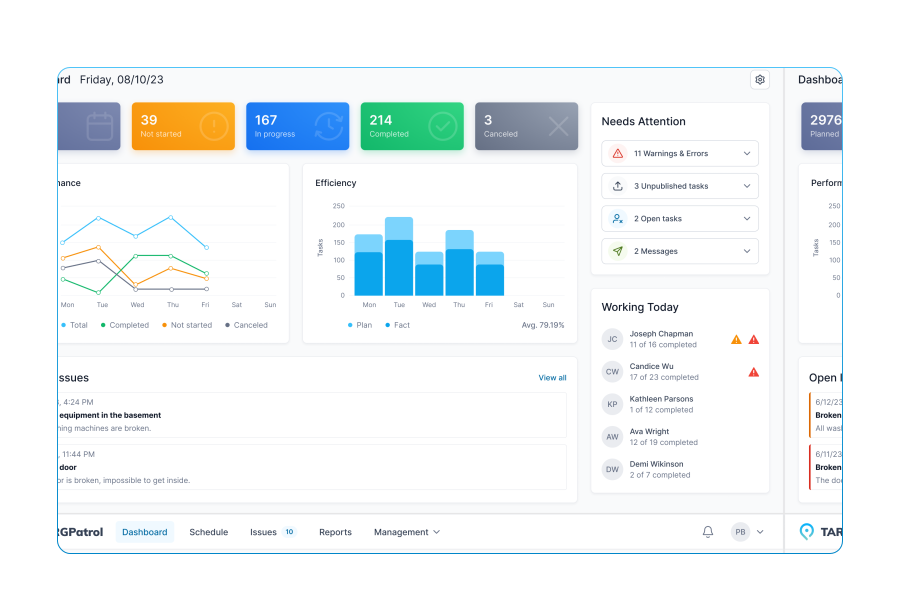
The Trainer Competencies Checklist is a structured tool for evaluating the professional skills, behavior, and readiness of fitness trainers. It helps ensure that trainers meet required standards in certification, communication, safety awareness, coaching technique, and client interaction. Instead of relying on subjective impressions, the checklist provides a clear and consistent framework for assessing trainer performance.
Each item is designed for practical, on-site evaluation. Simple [Flag] checks confirm whether key competencies are demonstrated, [Number] fields capture measurable data such as years of experience or client complaints, [Text] fields allow evaluators to record strengths, gaps, and development needs, and [Media] uploads can document observations or supporting evidence. This approach ensures fair, repeatable assessments across all trainers.
When used in a mobile checklist app, the evaluation process becomes more efficient and transparent. Supervisors can complete assessments during live sessions, record feedback immediately, and store all evaluations in a single digital history. Managers gain real-time visibility into trainer competency levels and can track progress, certifications, and improvement plans over time.
By using the Trainer Competencies Checklist regularly, fitness centers improve service quality, reduce safety risks, and support continuous professional development. It helps identify top performers, address skill gaps early, and ensure that every trainer delivers safe, effective, and professional training experiences for clients.
Trainer full name
Role / specialization (PT / group / rehab / etc.)
Required certifications valid and on file
CPR / First Aid certification valid
Professional insurance (if required) confirmed
Years of experience in training
Additional qualifications or specialties
Trainer appearance neat and professional
Uniform / dress code followed
Punctual for sessions
Prepared before session start (equipment, plan)
Communication clear and confident
Uses appropriate tone and language
Explains exercises in an understandable way
Checks client understanding
Builds rapport and trust with clients
Communication improvement notes
Demonstrates correct exercise technique
Provides clear verbal cues
Uses visual demonstrations effectively
Corrects client form safely and respectfully
Adjusts exercises to client level
Understands basic anatomy and biomechanics
Selects exercises aligned with client goals
Designs balanced and safe workout programs
Progressions and regressions applied correctly
Documents training plans properly
Conducts proper warm-up and cool-down
Monitors client fatigue and discomfort
Stops or modifies exercises when needed
Demonstrates strong injury-prevention awareness
Notes on safety awareness
Assesses client fitness level correctly
Collects relevant health history
Respects medical limitations and contraindications
Refers to medical professionals when appropriate
Motivates clients positively
Adapts coaching style to individual personalities
Maintains professional boundaries
Handles difficult situations calmly
Session structure well-paced
Time management effective
Transitions between exercises smooth
Session objectives achieved
Group class control effective (if applicable)
Voice projection and presence strong
Class safety maintained at all times
Participant engagement level high
Knowledge of gym equipment and usage
Ensures equipment is set up safely
Sanitizes equipment after use
Client feedback positive
Number of client complaints (if any)
Examples of positive feedback or issues
Professional conduct aligns with company values
Follows internal policies and procedures
Maintains confidentiality of client information
Overall competency level (junior / competent / advanced / expert)
Areas of strength
Areas for improvement
Training or coaching recommended

Mobile Work Order Management Software for Business Maintenance