How to Automate Building Systems Maintenance Control
Building Systems Maintenance Control
Building systems support the safe and reliable operation of a property. Heating, ventilation, water supply, electrical power, drainage, fire safety, and other technical equipment all depend on these systems being kept in working condition.
Completing maintenance work alone is not enough. Managers need to know whether the required schedule is being followed, whether employees actually inspect the equipment, which faults have been found, and whether they are resolved within the required time.
Building systems maintenance control should therefore cover the entire process: from a scheduled inspection to the verified closure of a detected fault.
Building Systems Maintenance Procedures
A maintenance procedure defines how building inspections, routine maintenance, and repairs are organized. It specifies which systems must be checked, who is responsible for the work, how often it must be performed, and how quickly detected faults must be resolved.
Maintenance includes the work required to keep building components and internal systems in working condition. This may include condition checks, setup, adjustment, performance support, and repairs to technical equipment.
The procedure may cover:
heating and heat supply;
ventilation and air conditioning;
cold and hot water supply;
sewer systems and internal drainage;
electrical networks and switchgear;
fire protection and emergency systems;
elevators and other technical equipment.
Scheduled and Unscheduled Building Systems Inspections
The condition of a building can be monitored through general, partial, and special inspections.
1. A general inspection covers the building as a whole, including its structures, technical equipment, and exterior areas.
2. A partial inspection focuses on individual rooms, building components, or building systems.
3. A special inspection may be required after an incident, damage to external utility networks, heavy rain, snowfall, strong winds, structural deformation, or an equipment failure that could disrupt normal facility operations.
The actual inspection frequency for each building depends on its purpose, equipment type, operating conditions, service contracts, internal policies, and applicable regulatory requirements.
Illustrative schedules may include:
general building inspections — twice a year;
inspections of rooms and building systems — daily;
inspections of rooms without permanently assigned staff — twice a day;
inspections during severe weather or other extreme conditions — four times a day.
Recording Results and Setting Repair Deadlines
Inspection results can be recorded in a logbook, inspection report, or digital form. The record should identify the date, inspected area, responsible person, system condition, detected faults, actions taken, and repair deadline. Equipment readings, comments, and photographs can be added when necessary.
The maintenance procedure should also define response targets. Routine requests may be reviewed on the day they are received, with corrective work organized by the following day. Emergency faults may require much shorter response times, for example:
pipeline failures and electrical short circuits — immediately;
certain electrical equipment faults — within three hours;
roof leaks — within 24 hours.
These are examples rather than universal deadlines. Each organization should follow the requirements that apply to its facility. If a defect poses a risk to people, structures, or equipment, immediate safety measures should come first, followed by correction of the underlying cause.
Common Challenges in Building Systems Maintenance Control
Even a detailed maintenance procedure does not guarantee that the work is actually performed. Oversight becomes especially difficult when an organization manages several buildings or works with external maintenance contractors.
Schedules may be stored in spreadsheets, assignments sent by phone, results written in paper logs, and photographs shared through messaging apps. As a result, the maintenance record is fragmented across multiple sources.
A manager may be unable to quickly verify:
whether the inspection was completed at the scheduled time;
whether the employee visited the required technical room;
whether the entire checklist was completed;
which deviations were found;
who received the issue for follow-up;
whether the repair deadline was met;
what evidence confirms that the fault was resolved.
The most serious gap occurs when a fault is recorded but no one monitors what happens next. An employee may find a leak or overheated equipment and report it, but the issue may remain without an owner or deadline. It can stay unresolved until the next inspection—or until it causes an emergency.
Automating Building Systems Maintenance Control with TARGPatrol
TARGPatrol is a platform for automating and digitally monitoring rounds, inspections, and on-site checks. It combines schedules, tasks, checklists, routes, and QR, NFC, and GPS Point verification.
1. Build the Site Structure
Create locations and control zones in the system, such as electrical rooms, pump rooms, heating substations, ventilation rooms, basements, roofs, and other areas that require inspection.
Each maintenance routine can be associated with a specific room, inspection route, and responsible employee or team.
2. Create the Maintenance Schedule
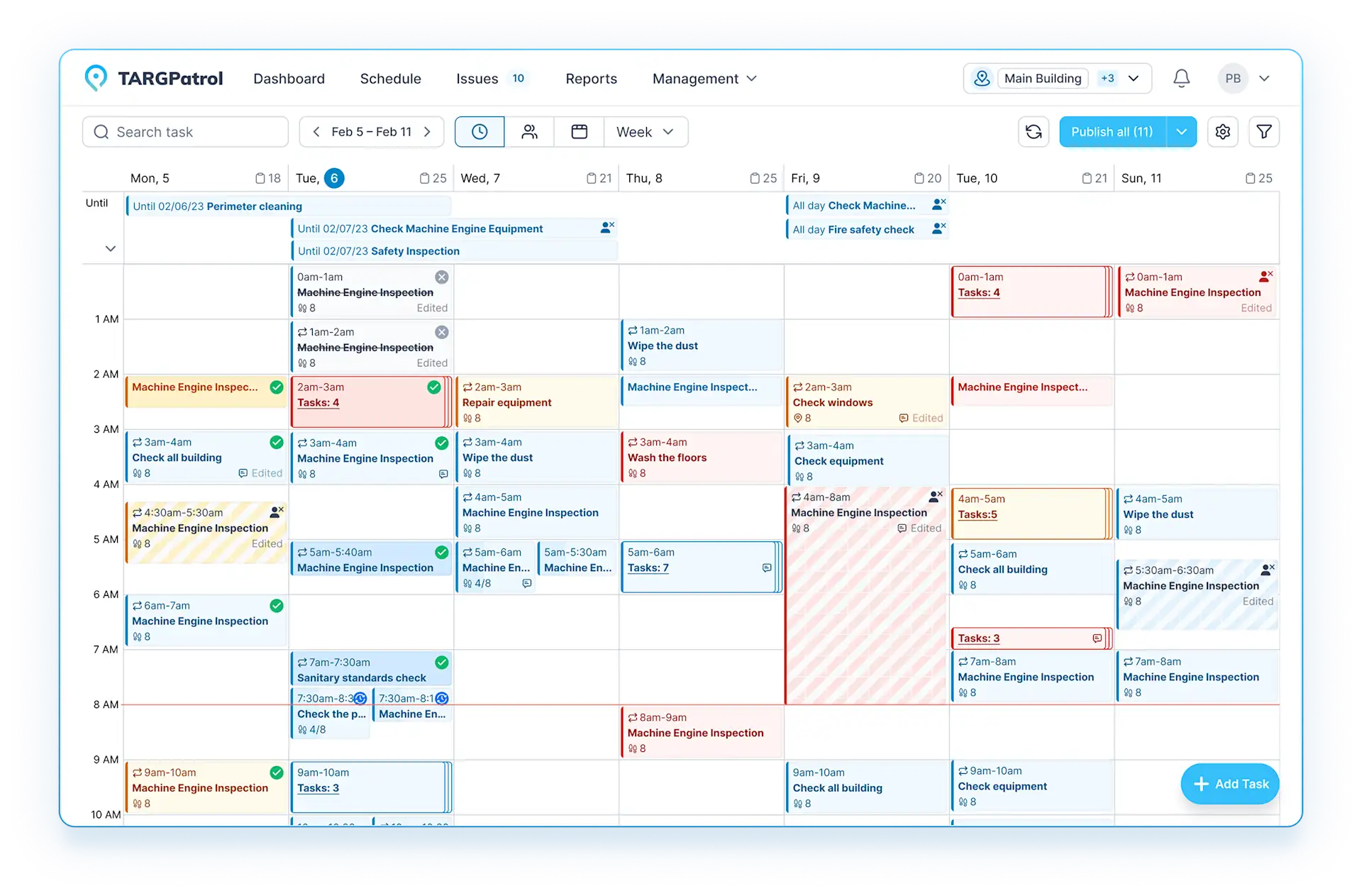
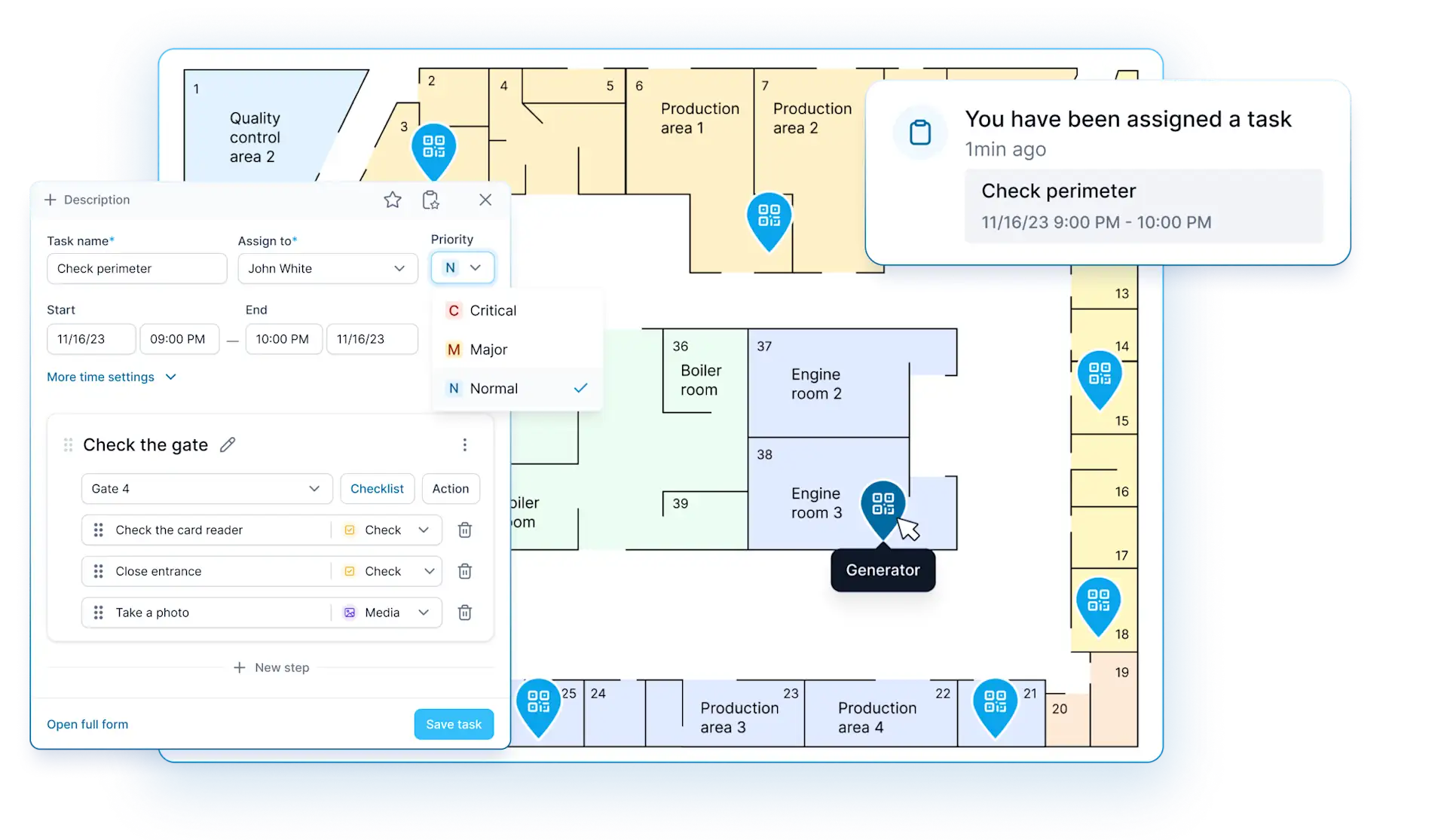
Managers can schedule routine rounds, partial inspections, and planned maintenance. Each task can have a recurrence rule, date and time, assignee, deadline, and required checklist.
Recurring tasks are generated automatically. Managers can see which work is scheduled, in progress, completed, or overdue.
3. Verify Inspections and Rounds
The employee receives a task in the mobile app with the room, equipment, instructions, inspection route, and list of required actions.
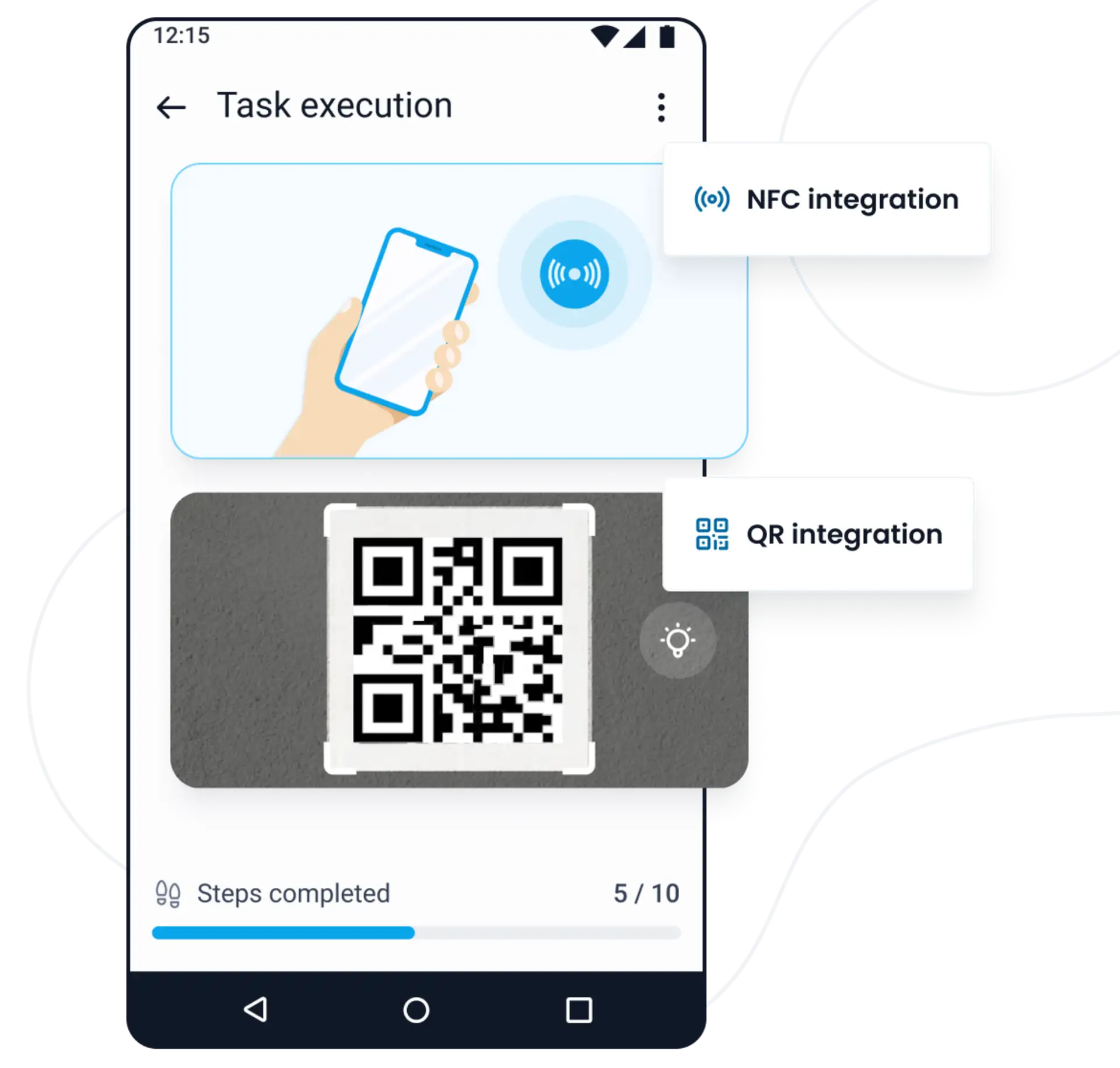
A visit to a Point can be confirmed using:
a QR code;
an NFC tag;
GPS Point proximity validation;
a photograph or video as supporting evidence.
QR, NFC, and on-demand GPS Point check-ins help verify that the inspection was performed at the required location instead of being completed formally after the shift.
4. Use Digital Checklists
A separate checklist can be created for each type of building system.
During a heating-system inspection, an employee may record temperature, pressure, pump condition, leaks, and unusual noise. During an electrical inspection, the checklist may cover panels, contacts, circuit breakers, grounding, moisture, and signs of overheating.
Checklists can include numeric readings, comments, photographs, and videos. Required fields help standardize the inspection and prevent critical steps from being skipped.
5. Report and Resolve Faults
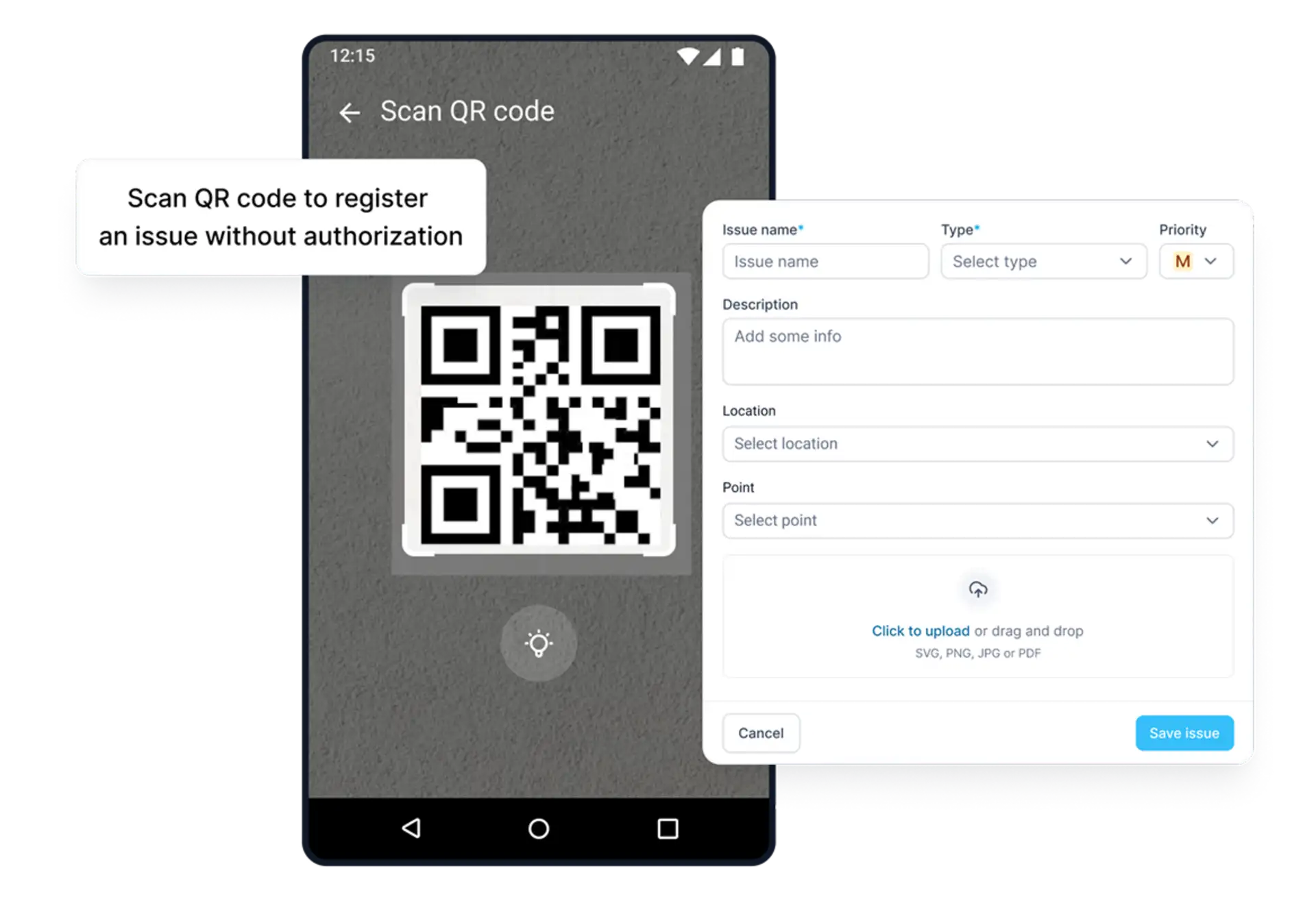
If an employee finds a defect during an inspection, they can report an issue in the mobile app. The issue can include a description, photographs, video, equipment readings, and the location where the problem was detected.
The manager can then assign a responsible person, set a priority, and define a due date. Emergency faults can be marked as urgent, while planned repairs can follow the deadline established by the maintenance procedure or service contract.
The entire process remains connected in the system:
detection → registration → assignment → repair → result verification → closure.
After completing the work, an employee or contractor can add a comment and a photograph of the result. The manager reviews the evidence and closes the task or issue.
6. Monitor Contractors
TARGPatrol can be used both by an in-house facilities team and to monitor work assigned to external contractors.
The customer can see who received the task and when, whether the contractor visited the site, which actions were completed, what supporting materials were attached, and whether the deadline was met.
This provides visibility into the actual work performed, rather than relying only on a signed completion document.
7. Review Analytics and Reports
Maintenance activity is stored in one system. Managers can review schedule compliance, open faults, overdue tasks, recurring issues, and the performance of employees or contractors.
When locations, Points, tags, task types, and assignees are configured consistently, the data can be reviewed by building, building system, fault type, responsible person, or selected period.
This helps identify equipment that requires repeated attention, areas where procedures are frequently missed, and work that is not completed on time.
Conclusion
Effective building systems maintenance control depends on more than having a written procedure. Organizations must ensure that the procedure is followed: inspections happen on time, equipment condition is documented, responsible people are assigned, and detected faults are resolved and verified.
TARGPatrol brings these activities together in one workflow:
a unified schedule for maintenance work;
verification that inspections were completed;
standardized digital checklists;
timely information about detected faults;
control over deadlines and responsible people;
photographic and video evidence of completed work;
work and inspection history for each location and Point;
analytics for employees, contractors, and building systems.
The result is a transparent and manageable maintenance process in which potentially dangerous faults can be found and corrected before they lead to serious consequences.