Manufacturing
 2/25/2026
Welding Machine Safety Inspection Checklist
A safe weld starts with a consistent pre-use check. The Welding Machine Safety Inspection Checklist walks operators through the critical items that prevent incidents: correct power and grounding, intact leads and connectors, functional E-stop/overheat indicators, shielding-gas setup and leak test, fume extraction and ventilation, torch/holder condition, and a short test bead to confirm stable arc and settings. Each line is objective and observable, so “pass” and “fail” mean the same thing to welders, supervisors, and auditors.
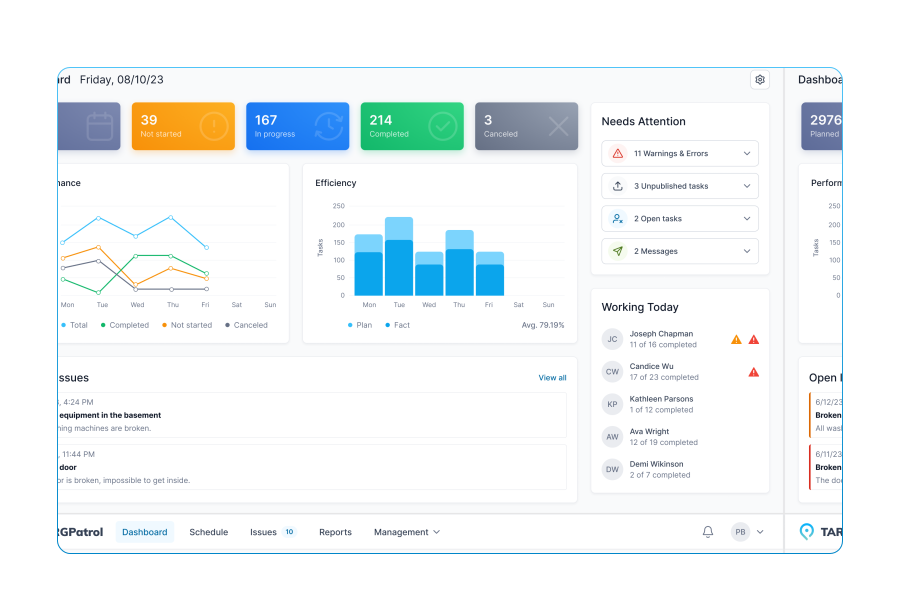
Use it two ways: print the free PDF for clipboard checks in low-connectivity areas, or run it in TARGPatrol to assign inspections by station or shift, timestamp results, and attach photo proof (e.g., regulator gauges, lead insulation, test bead). Mixed answer types keep records audit-ready: [Flag] for pass/fail, [Number] for readings (Ω ground continuity, gas flow, cylinder pressure, helmet shade), [Media] for photos/videos, and [Text] for defects and corrective actions.
In the app, completions feed dashboards you can filter by site, line, or contractor. Recurring schedules and reminders reduce missed checks, while trends highlight chronic issues — damaged work clamps, recurring gas leaks, overheating torches — so maintenance can target root causes, not just symptoms. Integration exports digital logs for safety meetings, insurance, and compliance documentation.
Over time, the checklist becomes a living standard. Update once when processes or equipment change (new wire type, different gas mix, added fume units) and reuse across stations. With a traceable history of who inspected what, when, and with which evidence, you’ll be ready for internal audits and regulatory reviews — and keep people, equipment, and product quality safer every shift.

Identify machine type (SMAW/MIG-MAG/TIG/FCAW)

Confirm asset ID/serial matches log, inspection date/time recorded
Operator qualified for process and WPS available at station

Upload overview photo of machine and work area

Power supply off/locked before checks, guards in place
Mains plug, cable, and strain relief intact (no cuts/exposed copper)
Input voltage selection correct for site power
Ground/earthing continuity verified (Ω)

Emergency stop functional, resets correctly
Thermal/overload indicator not lit on start-up
Work return lead and clamp intact, good contact surface
Lead connections (Dinze/lugs) tight, no overheating marks
Cable insulation on electrode/torch leads free of burns/cuts
Lead routing prevents trip, crush, or hot metal damage
Upload close-up of leads and work clamp
SMAW (stick) only — electrode holder jaws and insulation sound
SMAW — correct polarity set (DCEP/DCEN per WPS)
SMAW — electrode storage dry, rod condition acceptable
MIG/MAG/FCAW — wire feeder powers on, drive rolls clean/aligned
MIG/MAG/FCAW — correct drive roll type/size fitted
MIG/MAG/FCAW — liner condition acceptable, no kinks
MIG/MAG/FCAW — contact tip size matches wire (mm)
MIG/MAG/FCAW — nozzle clean, spatter removed
MIG/MAG/FCAW — wire type/diameter and lot # recorded
Upload photo of torch front end (tip/nozzle)
TIG — torch body/insulation intact, back cap O-ring OK
TIG — collet/collet body correct size, cup not cracked
TIG — tungsten size and tip geometry per WPS
TIG — HF start/kick works (if applicable)
TIG — polarity/mode set correctly
Cylinder secured upright with chain/strap
Regulator tight, gauges readable, no damage
Hose condition good, no cracks/abrasion
Soapy-water leak test passed at connections
Gas type confirmed (Ar/CO₂/Mix)
Cylinder pressure (bar/psi)
Set flow rate (L/min or CFH)
Upload photo of regulator and gauge readings
Machine cooling fans operate, vents free of dust
Water cooler level within range, no leaks (if water-cooled)
Fume extractor on and positioned at arc
Measured airflow at hood (m/s or CFM if known)
Filters due date checked, replace if clogged
Process selected per WPS, amps/volts/wire speed set
Inductance/arc force/hot start within spec (if available)
Test bead run on scrap, arc stable, no excessive spatter
Abnormal noise/odor/vibration observed
Record test parameters (V/A/ipm or m/min)
Upload short video/photo of test bead (optional)
Hot work permit in place (where required)
Fire watch assigned (if applicable)
Class ABC/CO₂ extinguisher present, gauge in green
No combustibles within spark radius, screens in place
Floor dry, no oil/water near machine or leads
Adequate lighting at workstation
PPE available and in good condition
Auto-darkening helmet lens cracks/sensor blockage
Helmet shade setting for process (shade #)
Spatter chisel/pliers, wire brush, and grinders guarded and available
Contact tips/nozzles/tungsten/electrodes in stock
Number of spare contact tips at station
Defective parts tagged and removed from service
Waste/disposal bins present, metal offcuts stored safely
Engine-driven welders (if used): fuel level, oil level, coolant OK
Engine hour meter reading (hrs)
Exhaust path clear, no fumes recirculating to work area
Calibration/inspection sticker valid (due date)
Non-conformities found (describe location/severity)
Machine status: In Service / Restricted / Out of Service
Corrective actions assigned (who/when)
Upload final station overview photo after setup



















Mobile Work Order Management Software for Business Maintenance