TARGPatrol
Checklists LibrarySafety Walk Checklist Manufacturing
ManufacturingManufacturing
Date icon3/19/2026

Safety Walk Checklist Manufacturing

Safety Audit Checklist for Manufacturing Company is a structured checklist used to assess workplace safety conditions in industrial environments and verify alignment with core OSHA expectations. It helps manufacturers inspect production areas systematically, including machine guarding, lockout/tagout, PPE, electrical safety, fire protection, chemical handling, forklift operations, storage practices, and employee safety behavior. The goal is to identify unsafe conditions and compliance gaps early, before they lead to injuries, downtime, equipment damage, or regulatory problems.


In TARGPatrol, this checklist can be completed directly on a mobile device during plant inspections, internal audits, supervisor walkthroughs, or follow-up checks after incidents. Auditors can record pass/fail results, add comments, attach photos of hazards, and document corrective actions on the spot. This makes safety audits more consistent, improves traceability, and gives management clearer visibility into recurring risks across workshops, production lines, warehouses, and support areas.


A digital manufacturing safety audit checklist also creates a documented inspection history that supports internal compliance programs, corrective action tracking, and preparation for external reviews. By standardizing audits and collecting evidence in one system, companies can strengthen safety discipline, respond faster to violations, and build a more proactive OSHA-oriented safety culture across the entire facility.

Safety Walk Checklist Manufacturing
0/185

Work area is clean and orderly

Check

Floors are free from slip, trip, and fall hazards

Check

Aisles and passageways are clearly marked and unobstructed

Check

Emergency exits are accessible and properly marked

Check

Lighting is sufficient for safe work

Check

Ventilation is adequate for the process performed

Check

Work areas are free of excessive dust, fumes, or mist

Check

Waste and scrap are removed promptly

Check

Materials are stored in a safe and stable manner

Check

Unsafe housekeeping issues identified

Text

Photo of general workplace condition

Media

Required safety notices are posted

Check

Emergency contact information is posted and visible

Check

Evacuation maps are available and current

Check

Area-specific safety procedures are available

Check

Operating instructions are accessible to employees

Check

Inspection and maintenance records are available where required

Check

Incident reporting procedure is posted or known

Check

Missing or outdated documents identified

Text

Photo of posted safety information

Media

Walking-working surfaces are maintained in safe condition

Check

Floor openings or holes are guarded or covered

Check

Stairs are in good condition with secure handrails

Check

Platforms and mezzanines have proper guardrails

Check

Slip-resistant measures are in place where needed

Check

Drainage or liquid control is adequate

Check

Trip hazards such as cords or hoses are controlled

Check

Walking-working surface hazards found

Text

Photo of surface hazard if present

Media

Machines have required guards in place

Check

Point-of-operation hazards are protected

Check

Rotating and moving parts are guarded

Check

Interlocks and safety devices appear functional

Check

Guards are not removed, bypassed, or damaged

Check

Employees are not reaching into hazardous motion areas unsafely

Check

Barrier guards or shields are adequate for the task

Check

Machine guarding deficiencies identified

Text

Number of machines with guarding issues

Number

Photo of guarding condition / defect

Media

Energy control procedures are available for relevant equipment

Check

Lockout / tagout devices are available and used correctly

Check

Authorized employees understand LOTO procedures

Check

Equipment servicing follows isolation procedures

Check

Stored energy is released or controlled before servicing

Check

Lockout points are clearly identified

Check

Group lockout procedures exist where needed

Check

Affected employees are aware of LOTO requirements

Check

LOTO deficiencies identified

Text

Photo of LOTO setup / issue

Media

Electrical panels are accessible and labeled

Check

Required clearance in front of panels is maintained

Check

Panel covers and blanks are in place

Check

No exposed energized parts observed

Check

Wiring, cords, and plugs are in safe condition

Check

Extension cords are used appropriately

Check

Temporary wiring is controlled and limited

Check

Grounding is in place where required

Check

Damaged electrical equipment removed from service

Check

Electrical hazards identified

Text

Number of electrical issues found

Number

Photo of electrical issue

Media

Required PPE is defined for the audited area

Check

Employees are wearing required PPE

Check

PPE is suitable for the hazards present

Check

PPE is in good condition

Check

Replacement PPE is available as needed

Check

Eye and face protection used where required

Check

Hearing protection used where required

Check

Hand protection used where required

Check

Protective footwear used where required

Check

Respiratory protection used where required

Check

High-visibility or protective clothing used where required

Check

PPE non-compliance observed

Text

Number of employees without proper PPE

Number

Photo of PPE compliance / issue

Media

Chemical containers are properly labeled

Check

Safety Data Sheets (SDS) are accessible

Check

Chemical inventory is current

Check

Employees understand chemical hazards in their area

Check

Incompatible chemicals are segregated

Check

Flammable materials are stored properly

Check

Secondary containment is used where required

Check

Spill response materials are available

Check

Eyewash / shower stations are available where required

Check

Eyewash / shower stations are accessible and unobstructed

Check

Chemical safety deficiencies identified

Text

Photo of chemical storage / labeling / issue

Media

Fire extinguishers are available in required locations

Check

Fire extinguishers are mounted, accessible, and visible

Check

Fire extinguishers are within inspection date

Check

Alarm pull stations and detectors are unobstructed

Check

Sprinkler heads are not blocked by storage

Check

Emergency routes are marked and clear

Check

Emergency lighting is functional where required

Check

Employees know evacuation procedures

Check

Assembly point is defined

Check

First aid kits are stocked and accessible

Check

Emergency preparedness issue identified

Text

Photo of fire / emergency equipment

Media

Manual material handling risks are controlled

Check

Loads are stable and safely stacked

Check

Storage racks appear undamaged

Check

Rack load limits are posted where required

Check

Heavy items are stored appropriately

Check

Sharp edges / protrusions are controlled

Check

Material handling equipment is used properly

Check

Storage aisles remain clear

Check

Material handling or storage issue identified

Text

Photo of storage / stacking condition

Media

Forklift operators are authorized / trained

Check

Pre-use inspections are completed

Check

Forklifts appear in safe operating condition

Check

Seat belts are used where required

Check

Loads are handled safely and within capacity

Check

Travel lanes are marked where applicable

Check

Pedestrian and vehicle traffic are separated where possible

Check

Charging / fueling area is safe and ventilated

Check

Damaged forklifts are removed from service

Check

Forklift safety issue identified

Text

Number of PIT issues found

Number

Photo of forklift / traffic issue

Media

Compressed gas cylinders are secured

Check

Cylinder caps are in place when not in use

Check

Full and empty cylinders are separated where required

Check

Regulators and hoses appear in good condition

Check

Cylinders are stored away from heat and ignition sources

Check

Pressure vessels / lines show no obvious leaks or damage

Check

Compressed gas or pressure system issue identified

Text

Photo of cylinder / system condition

Media

Hot work is controlled by procedure / permit where required

Check

Combustible materials are removed or protected

Check

Fire watch is assigned when required

Check

Welding screens or barriers are used

Check

Ventilation / fume extraction is adequate

Check

Gas hoses and regulators are in safe condition

Check

Cylinders used for welding are stored and handled safely

Check

Hot work safety issue identified

Text

Photo of hot work area / issue

Media

Respiratory hazards have been identified in the area

Check

Required respirators are available

Check

Employees use the correct respirator type

Check

Respirators are stored properly

Check

Respirators appear clean and maintained

Check

Employees appear trained in respirator use

Check

Respiratory protection issue identified

Text

Photo of respirator storage / issue

Media

Workstations support neutral working postures

Check

Repetitive motion risks are recognized and minimized

Check

Lifting, reaching, and twisting demands are controlled

Check

Mechanical assists are used where needed

Check

Adjustable stations / seating provided where applicable

Check

Ergonomic risk identified

Text

Photo of ergonomic issue

Media

New hires received safety orientation

Check

Job-specific safety training is documented

Check

Refresher training is current where needed

Check

Employees understand key hazards in their area

Check

Employees know how to report hazards and near misses

Check

Supervisors enforce safety procedures consistently

Check

Training gaps identified

Text

Number of employees interviewed

Number

Evidence / photo related to training gap

Media

Previous audit findings were corrected

Check

Open corrective actions are tracked

Check

Repeat violations were observed

Check

Unsafe behaviors were observed during audit

Check

Near-miss reporting is active in this area

Check

Immediate action was required during audit

Check

Description of repeated or critical issue

Text

Number of new corrective actions required

Number

Photo of repeat / critical issue

Media

Area appears compliant with core OSHA safety expectations

Check

Any imminent danger condition identified

Check

Any stop-work issue identified

Check

Overall safety performance of area

Text

Main non-conformities found

Text

Priority corrective action #1

Text

Priority corrective action #2

Text

Priority corrective action #3

Text

Responsible person for corrective actions

Text

Target completion date

Text

Additional comments

Text

Audit conclusion (compliant / minor issues / major issues / critical)

Text

Follow-up audit required

Check

Follow-up audit date

Text
Similar checklists
Workplace Safety Inspection Checklist
ManufacturingManufacturing
Date icon3/19/2026

Workplace Safety Inspection Checklist

Workplace Inspection Checklist is a routine inspection tool designed to keep the working environment safe, organized, and operationally controlled. Instead of focusing on one narrow risk area, it gives supervisors and inspectors a broad view of everyday workplace conditions — from cleanliness, access routes, and storage practices to equipment safety, emergency readiness, and employee compliance with site rules. It is used to catch visible hazards early, standardize inspections, and maintain a consistent baseline of safety across the facility. In TARGPatrol, the checklist turns a regular walkthrough into a documented digital process. The inspector completes each point on a mobile device, records non-conformities, adds comments, captures photo evidence, and flags issues that require corrective action. This makes inspections more objective and traceable, reduces gaps in reporting, and helps managers see not only isolated violations, but also repeated patterns across teams, departments, or sites. Such a checklist is useful for offices, warehouses, retail locations, hotels, workshops, and mixed-use operational facilities where daily discipline and safe conditions matter. A digital workplace inspection checklist also creates a reliable inspection log for internal control, management reporting, and follow-up reviews. By replacing informal checks with a structured process, companies improve accountability, react faster to problems, and build a more stable safety culture in day-to-day operations.

TARGPatrol
Winch Machine Safety Checklist
ManufacturingManufacturing
Date icon2/25/2026

Winch Machine Safety Checklist

A safe lift starts with a disciplined inspection. The Winch Machine Inspection Checklist guides crews through all critical points before use — nameplate and SWL/WLL, guarding and controls, emergency stop, rope/line condition, hook and terminations, fairleads and sheaves, drum wraps, brakes/clutch/gearbox, hydraulics or electrics, and functional tests under light load. Each line is clear and measurable, so “pass” and “fail” mean the same thing to operators, supervisors, and auditors. Use it two ways: print the free PDF for clipboard checks in low-connectivity areas, or run it in TARGPatrol to assign inspections by unit or shift, timestamp results, and capture photo/video evidence (e.g., nameplate, worst rope section, brake test). Mixed answer types keep records audit-ready: [Flag] for pass/fail, [Number] for readings (pressure, wraps, insulation, temperatures), [Media] for photos/videos, and [Text] for defects and corrective actions. In the app, completions roll into dashboards and logs you can filter by asset, site, or contractor. Recurring schedules and reminders reduce missed checks; trend reports surface chronic issues — wire breaks near the hook, recurring oil weeps, overheating gearboxes — so maintenance can target root causes instead of firefighting. Over time, the checklist becomes a live standard for your fleet. Update it once when processes or equipment change (e.g., switching to synthetic line or adding wireless remotes) and reuse across locations. With a traceable history of who inspected what, when, and with which evidence, you’re ready for internal audits, client reviews, and regulatory checks — while keeping operators and loads safer every day.

TARGPatrol
Welding Machine Safety Inspection Checklist
ManufacturingManufacturing
Date icon2/25/2026

Welding Machine Safety Inspection Checklist

A safe weld starts with a consistent pre-use check. The Welding Machine Safety Inspection Checklist walks operators through the critical items that prevent incidents: correct power and grounding, intact leads and connectors, functional E-stop/overheat indicators, shielding-gas setup and leak test, fume extraction and ventilation, torch/holder condition, and a short test bead to confirm stable arc and settings. Each line is objective and observable, so “pass” and “fail” mean the same thing to welders, supervisors, and auditors. Use it two ways: print the free PDF for clipboard checks in low-connectivity areas, or run it in TARGPatrol to assign inspections by station or shift, timestamp results, and attach photo proof (e.g., regulator gauges, lead insulation, test bead). Mixed answer types keep records audit-ready: [Flag] for pass/fail, [Number] for readings (Ω ground continuity, gas flow, cylinder pressure, helmet shade), [Media] for photos/videos, and [Text] for defects and corrective actions. In the app, completions feed dashboards you can filter by site, line, or contractor. Recurring schedules and reminders reduce missed checks, while trends highlight chronic issues — damaged work clamps, recurring gas leaks, overheating torches — so maintenance can target root causes, not just symptoms. Integration exports digital logs for safety meetings, insurance, and compliance documentation. Over time, the checklist becomes a living standard. Update once when processes or equipment change (new wire type, different gas mix, added fume units) and reuse across stations. With a traceable history of who inspected what, when, and with which evidence, you’ll be ready for internal audits and regulatory reviews — and keep people, equipment, and product quality safer every shift.

TARGPatrol
Power Press Machine Preventive Maintenance Checklist
ManufacturingManufacturing
Date icon2/25/2026

Power Press Machine Preventive Maintenance Checklist

A power press stays dependable when maintenance is precise and repeatable. The Power Press Machine Maintenance Checklist maps every subsystem technicians must verify — slide and gibs, clutch-brake, flywheel and drive, lubrication, pneumatics/hydraulics, electrical cabinet, and all safety circuits (E-stops, two-hand controls, mode selector, top/stop). Guarding and presence-sensing (light curtain/laser) are included, along with die-area essentials: clamping points, shut height, and feed/straightener timing. Use it as a free printable PDF for shop-floor PMs, or run it in TARGPatrol to assign work orders, capture timestamps, and attach photo/video evidence (e.g., brake stop trace, light-curtain alignment photo, gib wear close-up). Mixed answer types make records audit-ready by default: [Flag] for pass/fail, [Number] for readings (stopping time, pressures, clearances, torque), [Media] for proof, and [Text] for notes, defects, and corrective actions. Inside the app, completed checks roll into dashboards and trend views per press, line, or shift. Recurring schedules and reminders reduce skipped PMs; analytics expose patterns — lengthening stop distances, recurring air/oil leaks, abnormal vibration or heat — so you can plan parts and interventions before downtime hits. Exports feed your safety meetings, insurer requests, and regulatory files without extra formatting. As tooling, guards, or procedures evolve, update the checklist once and reuse it across machines and plants. The result is a clear audit trail of who serviced which press, when, and with what evidence — keeping operators protected, availability high, and compliance straightforward.

TARGPatrol
Milling Machine Preventive Maintenance Checklist
ManufacturingManufacturing
Date icon2/25/2026

Milling Machine Preventive Maintenance Checklist

A precise mill depends on disciplined, repeatable maintenance. The Milling Machine Maintenance Checklist walks technicians through each critical subsystem — base/column and leveling, table/saddle/ways, linear guides and ballscrews, spindle and drawbar, ATC/tool changer, axis drives and feedback, lubrication circuit, coolant and chip management, pneumatics/hydraulics, electrical cabinet, guarding and interlocks, and (if fitted) probing/tool setter. Each line states an observable outcome or measurable value so “OK” isn’t a guess — it’s a standard. Use it two ways: download the free PDF for clipboard PMs and offline work, or run it in TARGPatrol to assign tasks by machine/shift, timestamp results, and attach photo or video proof (e.g., taper condition, coolant refractometer reading, light curtain/interlock tests). Mixed answer types keep records audit-ready by default: [Flag] for pass/fail checks, [Number] for readings (runout, backlash, drawbar force, coolant concentration, pressures, temperatures), [Media] for evidence, and [Text] for notes, defects, and corrective actions. Inside the app, completions roll into dashboards and trend views by machine, cell, or plant. Recurring schedules and reminders reduce missed PMs; analytics surface patterns — rising spindle temperature at high RPM, increasing backlash on Y, recurrent coolant contamination — so you can plan parts and interventions before downtime hits. Exports feed safety meetings, quality reviews, and audit packages without extra formatting. As tooling, fixtures, or processes evolve, update the checklist once and reuse it across similar mills. With a traceable history of who serviced what, when, and with which evidence, you keep accuracy tight, uptime high, and compliance straightforward — while extending spindle life and protecting surface finish and geometric tolerance on every job.

TARGPatrol
Machine Safety Audit Checklist
ManufacturingManufacturing
Date icon10/22/2025

Machine Safety Audit Checklist

A Machine Safety Audit Checklist helps EHS teams and supervisors turn routine machine checks into a structured, repeatable process. Instead of relying on memory, it lays out clear items across guarding, emergency stops, interlocks, electrical panels, hydraulics/pneumatics, lockout/tagout, housekeeping, extraction/ventilation, and operator training. Each item is simple to verify — from “E-Stops latch and release” to “guards secured and interlocks proven” — so critical hazards aren’t overlooked. For production lines and maintenance shops, this checklist supports compliance with internal standards and local regulations, reduces unplanned downtime, and lowers incident risk. It establishes a consistent rhythm of inspections that keeps access clear, controls functional, and wear or leaks discovered early — before they become failures. Supervisors get a clean audit trail. The checklist documents what was checked, by whom, and when; captures defects; and links corrective actions with responsible owners and due dates. That record is invaluable during audits, insurance reviews, and incident investigations. The template works as a printable PDF for clipboards and in the TARGPatrol mobile app, where teams can add photos, enter readings, and leave comments in real time. Mixed answer types — [Flag], [Number], [Media], [Text] — make it easy to record conditions, measurements, and evidence in one place. Used regularly, the checklist improves machine reliability, safeguards operators, and keeps your facility audit-ready every day.

TARGPatrol
Heavy Equipment Safety Inspection Checklist
ManufacturingManufacturing
Date icon10/22/2025

Heavy Equipment Safety Inspection Checklist

A Heavy Equipment Inspection Checklist helps operators, mechanics, and EHS teams turn daily pre-use checks into a clear, repeatable routine. Instead of relying on memory, it lays out simple, verifiable items across identification, cab safety, visibility, alarms, fluids, powertrain, hydraulics, undercarriage/tires, attachments, and functional tests. Each line is easy to confirm — from “seatbelt latches” and “backup alarm sounds” to “no hydraulic leaks” and “tire/track condition within limits” — so critical issues aren’t missed. For construction sites, quarries, and plants, this checklist supports compliance with internal policies and local regulations, reduces unplanned downtime, and lowers incident risk. Used daily, it keeps equipment ready to work: defects are caught early, documentation is consistent, and unsafe machines are flagged out of service before failure. Supervisors get a clean audit trail. The checklist records who inspected what and when, photos of defects, measured values, and assigned corrective actions — invaluable for audits, insurance reviews, and incident investigations. The template works both as a printable PDF and in the TARGPatrol mobile app. Teams can attach photos, enter readings, and add comments in real time. Mixed answer types — [Flag], [Number], [Media], [Text] — make it easy to capture conditions, measurable data (hour meter, pressures, tread depth), visual evidence, and context in one place. Regular use improves equipment reliability, protects operators, and keeps projects on schedule.

TARGPatrol
Fire Apparatus Inspection Checklist
ManufacturingManufacturing
Date icon10/22/2025

Fire Apparatus Inspection Checklist

A Fire Equipment Inspection Checklist (Manufacturing) helps EHS managers and supervisors turn daily and weekly fire-safety checks into a clear, repeatable process. Instead of relying on memory, it lays out concise tasks across extinguishers, hose reels and hydrants, sprinkler systems, fire pumps, alarms and detectors, emergency lighting, egress routes, hot-work controls, and storage of flammables. Each item is simple to verify — from “extinguisher gauge in green” to “sprinkler control valves sealed open” — so nothing critical is missed. For plants and warehouses, this checklist supports compliance with internal standards and local fire codes, reduces the risk of citations during inspections, and minimizes downtime from preventable incidents. It builds a consistent routine that keeps equipment ready, exit routes clear, and high-hazard areas (hot work, dust collection, charging stations) under control. Supervisors gain an instant audit trail. The checklist documents what was checked, when, by whom, and what defects were found — plus assigned corrective actions and closure notes. That record can be essential during audits, insurance reviews, or incident investigations. The template works both as a printable PDF for clipboards and in the TARGPatrol mobile app, where teams can capture photos, log readings, and add comments in real time. Mixed answer types — [Flag], [Number], [Media], [Text] — make it easy to record conditions, measurements, and evidence in one place. Used regularly, the checklist keeps equipment serviceable, improves response readiness, and helps your facility stay inspection-ready every day.

TARGPatrol
Electrical Equipment Safety Checklist
ManufacturingManufacturing
Date icon10/22/2025

Electrical Equipment Safety Checklist

An Electrical Equipment Maintenance Checklist helps maintenance and EHS teams turn scheduled work into a clear, repeatable process. Instead of relying on memory, it lays out actionable items across LOTO and absence-of-voltage verification, enclosure condition, labeling and single-line accuracy, conductors and terminations, grounding/bonding, protection devices, motors and starters, VFDs/drives, transformers, UPS/batteries, and thermal inspections. Each item is simple to confirm — from “terminals torqued, no discoloration” to “RCD/GFCI trip time within spec” — so critical details aren’t missed. For plants and warehouses, this checklist strengthens electrical safety, cuts unplanned downtime, and supports compliance with internal standards and local regulations. Used regularly, it creates a maintenance rhythm where clearances are preserved, wear and hotspots are detected early, and protection settings stay current. Supervisors gain a clean audit trail. The checklist records who checked what and when, documents defects, and links corrective actions to owners and due dates — invaluable during audits, insurance reviews, and incident investigations. The template works both as a printable PDF and in the TARGPatrol mobile app. Teams can attach photos, enter measurements, and add comments in real time. Mixed answer types — [Flag], [Number], [Media], [Text] — make it easy to capture conditions, numerical readings (voltage, torque, resistance, temperature, vibration), visual evidence, and context in one place. Regular use improves reliability, speeds maintenance, and keeps your facility inspection-ready.

TARGPatrol
Drill Machine Inspection Checklist
ManufacturingManufacturing
Date icon10/22/2025

Drill Machine Inspection Checklist

A Drill Machine Maintenance Checklist turns planned service into a clear, repeatable routine for mechanics and EHS teams. Instead of relying on memory, it lays out straightforward items that are easy to verify across lockout/tagout (LOTO) and zero-energy checks, guards and interlocks, electrical panel and grounding, motor/VFD health, belts or gear train, spindle and quill, chuck/collet condition, feeds and depth stop, worktable/vises/fixtures, lubrication points, coolant system, extraction/filtration, slideways and covers, and a short post-service test run. Each line is practical to confirm — from “E-Stop latches and releases” and “belt condition OK” to “spindle runout within spec” and “coolant concentration correct” — so critical details aren’t missed. For workshops and production lines, this checklist improves equipment reliability, reduces unplanned downtime, and supports compliance with internal standards and local safety rules. It creates a consistent cadence where wear, heat, vibration, and leaks are caught early; guards stay effective; and machining accuracy is maintained. Supervisors get a clean audit trail. The checklist captures who performed the work and when, measured values (e.g., voltage, current, runout, vibration, temperatures, coolant %), photos of defects and fixes, and assigned corrective actions with owners and due dates — evidence that’s invaluable during audits, warranty claims, or incident reviews. The template works both as a printable PDF and in the TARGPatrol mobile app. Teams can attach photos, enter numeric readings, toggle flags for condition/N/A, and add comments in real time. Using it regularly helps keep drill machines safe, accurate, and ready for production.

TARGPatrol
Vehicle Maintenance Checklist
ManufacturingManufacturing
Date icon10/1/2025

Vehicle Maintenance Checklist

A good vehicle inspection checklist turns guesswork into a clear, repeatable routine that anyone can follow — whether you’re a daily commuter, a family driver, or a fleet supervisor. The process starts before the engine turns over: confirm required documents are on board, scan the dash for warning lights, and verify that seat belts latch and retract properly. Visibility is next: headlights, indicators, brake and reverse lights must work; the windshield should be clean with effective wipers/washer; mirrors and any cameras should be aligned; and the defog/defrost functions should keep glass clear in bad weather. Road-readiness continues with tires and wheels, because they’re your only contact with the road. Check tread depth and pressures (cold), look for cuts or bulges, and confirm wheel nuts and locks are present. Under the hood, a quick look at fluids (engine oil, coolant, brake, and, where applicable, transmission and power steering) prevents many early failures. Belts and hoses should be free of cracks or leaks, battery terminals tight and clean, and there should be no fresh spots under the car indicating leaks. Choose the format that fits your routine. Keep a printable PDF in the glovebox for quick checks, or use a mobile version to time-stamp inspections, attach photos of issues, and automatically flag missing or expired items for replacement. For fleets, assign ownership (driver or shift lead), set a weekly/monthly cadence for deep checks, and review the checklist quarterly to reflect new regulations, vehicle changes, or service intervals. Used consistently, this checklist shortens pre-trip time, catches small problems before they become expensive repairs, and creates a clean audit trail for safety teams, insurers, and clients. The payoff is fewer roadside surprises, better uptime, and confidence that every trip starts safe.

TARGPatrol
Excavator Pre-start Checklist for Daily Maintenance
ManufacturingManufacturing
Date icon10/1/2025

Excavator Pre-start Checklist for Daily Maintenance

An Excavator Pre-Start Checklist turns “give it a quick look” into a consistent, shift-by-shift routine that operators and maintenance can follow the same way every day. It begins with safety and compliance — operator fit for duty, required PPE on, fire extinguisher present, manuals and permits on hand — so the machine is safe to start before anyone turns the key. Inside the cab, the operator confirms the seat belt latches, mirrors/cameras and HVAC/defogger are set, and the display shows no active fault codes. Controls are labeled and responsive. A short no-load function test closes the loop: smooth start, stable idle, and clean throttle response; boom, stick, and bucket cycle without jerks or unusual noise; swing brakes properly; travel forward/reverse and the park brake hold as expected. Any abnormal vibration, hot spot, or warning is captured immediately with a note, photo, or meter reading so the issue becomes planned maintenance — not unplanned downtime. Use the format that fits your sites. Print the PDF for clipboards and low-signal zones, or run a mobile version to time-stamp checks, attach before/after photos of couplers and hoses, and open maintenance tickets on the spot. Review and refine the checklist quarterly — update limits from the OEM manual, add new attachments, and remove steps that don’t add value. A short, current pre-start routine keeps excavators safe, predictable, and ready to hit productivity targets.

TARGPatrol
Electrical Equipment Inspection Checklist
ManufacturingManufacturing
Date icon10/1/2025

Electrical Equipment Inspection Checklist

Make electrical checks predictable and traceable. This checklist gives technicians and supervisors a clear routine for routine maintenance, visual inspection, and safety verification — so issues are caught early and equipment returns to service confidently. It starts with safe work setup (qualified personnel, PPE, permits/LOTO, one-line/SOP on hand) and a quick area scan to control access and remove slip/trip hazards before covers come off. The walk-through then moves from outside to inside, lowest risk to highest: confirm nameplate data and labeling (circuit IDs, arc-flash/shock warnings), inspect enclosures and cooling paths, and look for signs of heat, moisture, dust, or corrosion. Cords, plugs, glands, and terminations are checked for cuts, looseness, and discoloration; protection and controls are verified for correct type and basic function. Where applicable, de-energized tests and energized checks confirm that the equipment operates as intended without abnormal noise or vibration. Thermal imaging, ventilation/filter checks, and power-quality notes round out condition monitoring. Use whatever format fits your site. Print a PDF for panel-side checks in low-signal areas, or run the mobile version to time-stamp steps, attach thermography images, record readings, and trigger maintenance tickets instantly. Review and tune the checklist quarterly — align pass/fail limits with OEM manuals and coordination studies, add site-specific hazards, and retire steps that don’t add value. Consistent use reduces arc-flash and shock risk, cuts unplanned outages, and builds an auditable history you can share with EHS, QA, and insurers.

TARGPatrol
Crane Inspection Checklist for Daily Maintenance
ManufacturingManufacturing
Date icon10/1/2025

Crane Inspection Checklist for Daily Maintenance

Keep every lift safe and compliant with a concise, field-ready daily inspection checklist. This template walks operators through the essential pre-use checks needed to spot wear, damage, or setup issues before work begins — helping prevent downtime, near-misses, and costly failures. What it covers: Operator readiness and required PPE. Site/setup conditions (ground stability, barricades, weather). Structural components (boom/jib/bridge, pins/bolts, guards). Power & hydraulics (leaks, hoses, fluids, electrics). Hoist system (wire rope/chain, sheaves/drum, reeving). Hooks & hardware (latch, throat opening, swivel). Controls & safety devices (E-stop, brakes, limit switches, alarms). Rigging gear and communication checks. No-load function test and defect reporting. How to use: 1. Complete before the first lift of the shift (and after any incident or maintenance). 2. Mark each item pass/fail, attach photos where needed, and record hour-meter. 3. Tag-out defective components and log corrective actions. 4. Store records for audits and trend analysis. Who it’s for: crane operators, maintenance teams, and supervisors in fabrication shops, warehouses, construction, and industrial sites. Works for mobile, tower, and overhead/gantry cranes — use the “if applicable” items as needed. Available formats: download a printable PDF for clipboards, or load the checklist into a mobile app to capture photos, timestamps, GPS, and digital signatures. Consistent daily use supports regulatory compliance (e.g., OSHA/ASME guidelines), improves equipment reliability, and reinforces a strong safety culture.

TARGPatrol
Walkthrough Safety Inspection Checklist
ManufacturingManufacturing
Date icon8/28/2025

Walkthrough Safety Inspection Checklist

A Daily Manufacturing Safety Checklist turns start-of-shift intentions into a simple routine. It prompts the basics first: PPE on and in good condition, guards and interlocks in place, e-stops tested, first-aid/eyewash accessible, and machines powered up within spec (air, power, lube). Operators know exactly what “ready” means before the line moves. During the shift, the list keeps hazards in check: housekeeping (dry floors, clear aisles), material handling (stable pallets, forklift checks), chemical controls, and quick ergonomics cues. It also adds core compliance touches — fire extinguishers accessible and in the green, electrical panels with proper clearance. Quality and process safety get a slot, too: first-article or start-up verification, poke-yokes active, alarms acknowledged, and simple counts for scrap or incidents. If something’s off, the checklist captures it immediately with a short note and a clear next step (isolate, tag, notify). End-of-shift items close the loop — clean area, restore energy states, reinstall guards after maintenance, handover notes. Use the format that fits your floor. Print the PDF for clipboards and low-tech zones, or run a mobile app version to time-stamp checks, add quick photos (e.g., a blocked panel before/after), and log near-misses for trend reviews. Either way, supervisors get a fast, consistent picture of safety status across teams. Keep it a living document. Review monthly with operators, add new checkpoints when equipment changes, and remove steps that don’t add value. A short, clear checklist — kept current—reduces risk, speeds audits, and makes safe work the default, every shift.

TARGPatrol

Mobile Work Order Management Software for Business Maintenance
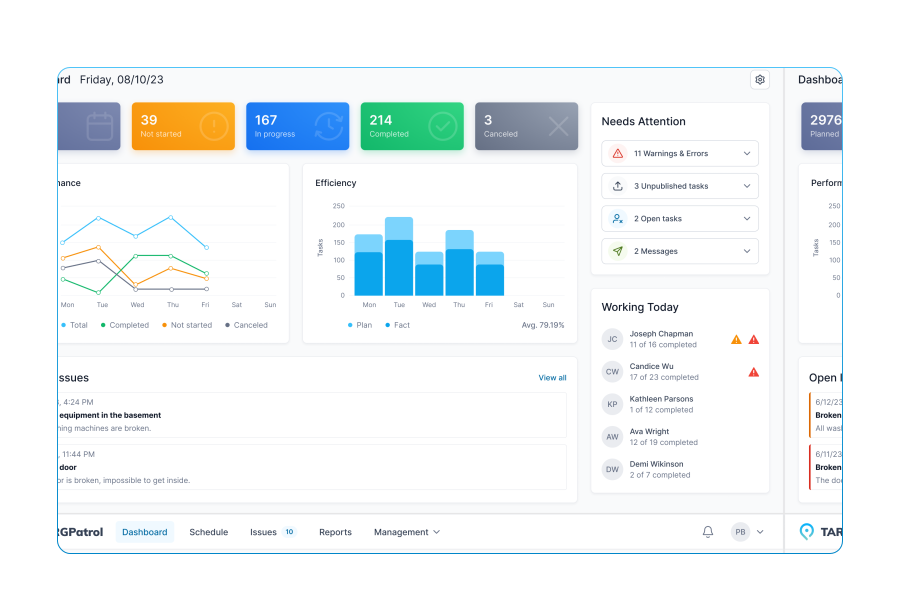
A cloud-based work order software designed to streamline inspections and task management across diverse service areas, enhancing operational efficiency and productivity.
Try now for FREE
TARGPatrol promo