TARGPatrol
Checklists LibraryPre Production Checklist
ManufacturingManufacturing
Date icon8/28/2025

Pre Production Checklist

A production checklist turns a shift into a clear sequence of steps that operators and supervisors can follow the same way every time. Instead of relying on memory, it lays out start-up safety checks (PPE, guards, e-stops), utilities and machine readiness , materials verification, and line setup. Everyone knows what to do first, what “ready” means, and what must be signed off before the line runs.


Housekeeping and safety are built in rather than bolted on. The list prompts 5S (tools away, bins labeled, floors clear), chemical/SDS confirmation if applicable, and machine care items like filter or blade checks. End-of-shift tasks cover cleaning, count reconciliation, packaging/label verification, traceability entries, and a short handover note so the next team isn’t starting blind.


Use the checklist in whichever format fits your floor: print a PDF for clipboards, or run a digital version to time-stamp checks, attach photos, and auto-total counts. Either way, keep it a living document — review monthly with operators, add new gauges or spec limits when products change, and remove steps that no longer add value. The result is a line that starts faster, runs steadier, and hands off cleanly at the end of every shift.


Pre Production Checklist
0/38

All operators wearing required PPE (gloves, glasses, hearing)

Check

Emergency exits, spill kits, and fire extinguishers accessible

Check

Machine guards, light curtains, and interlocks installed & secured

Check

Emergency stop verified at one station (functional test)

Check

Upload a photo of the main guard/interlock area

Media

Note any safety hazards or near-misses observed during setup

Text

Main power, air, and vacuum available, pressures within spec

Check

Record line air pressure (psi)

Number

Lubrication levels OK on critical assets

Check

Upload photo of HMI status/start-up screen

Media

Abnormal noises/vibrations detected during dry run? Describe

Text

Latest work order and drawings at the line (rev verified)

Check

Correct BOM and materials staged (IDs match WO)

Check

Lot/batch numbers recorded for all incoming materials

Text

SDS (safety data sheets) available for all chemicals used

Check

Scales/dispensers zeroed and verified

Check

Gauges calibrated (date within validity)

Check

Vision sensors/scanners focused, check part passes

Check

Deviations from standard setup? Note details

Text

Trial piece produced (first-off)

Check

Critical dimensions measured against spec (first-article)

Check

Surface finish/appearance confirmed (no scratches/flash)

Check

Functional test passed (fit/leak/continuity/etc.)

Check

Upload photo of first-off with measurement notes

Media

Initial SPC/Control plan available at station

Check

Upload last approved SPC/control chart (baseline)

Media

Aisles and work area free of clutter/spills (pre-start)

Check

Bins labeled, tools shadow-boarded and returned

Check

Waste streams set up (general/recycling/hazardous)

Check

5S improvements needed before start? Note

Text

Open NCRs affecting this order reviewed & dispositions clear

Check

Defective/hold parts from prior run isolated in red-tag area

Check

Upload photo of tagged nonconforming material (if present)

Media

Brief description of known risks/root causes to monitor

Text

Next order/materials pre-staged for changeover plan

Check

Changeover parts/tooling accounted for and stored

Check

Cleaning done: machines wiped, floor around line mopped

Check

Production start authorized by supervisor/QC

Check
Similar checklists
Machine Safety Audit Checklist
ManufacturingManufacturing
Date icon10/22/2025

Machine Safety Audit Checklist

A Machine Safety Audit Checklist helps EHS teams and supervisors turn routine machine checks into a structured, repeatable process. Instead of relying on memory, it lays out clear items across guarding, emergency stops, interlocks, electrical panels, hydraulics/pneumatics, lockout/tagout, housekeeping, extraction/ventilation, and operator training. Each item is simple to verify — from “E-Stops latch and release” to “guards secured and interlocks proven” — so critical hazards aren’t overlooked. For production lines and maintenance shops, this checklist supports compliance with internal standards and local regulations, reduces unplanned downtime, and lowers incident risk. It establishes a consistent rhythm of inspections that keeps access clear, controls functional, and wear or leaks discovered early — before they become failures. Supervisors get a clean audit trail. The checklist documents what was checked, by whom, and when; captures defects; and links corrective actions with responsible owners and due dates. That record is invaluable during audits, insurance reviews, and incident investigations. The template works as a printable PDF for clipboards and in the TARGPatrol mobile app, where teams can add photos, enter readings, and leave comments in real time. Mixed answer types — [Flag], [Number], [Media], [Text] — make it easy to record conditions, measurements, and evidence in one place. Used regularly, the checklist improves machine reliability, safeguards operators, and keeps your facility audit-ready every day.

TARGPatrol
Heavy Equipment Safety Inspection Checklist
ManufacturingManufacturing
Date icon10/22/2025

Heavy Equipment Safety Inspection Checklist

A Heavy Equipment Inspection Checklist helps operators, mechanics, and EHS teams turn daily pre-use checks into a clear, repeatable routine. Instead of relying on memory, it lays out simple, verifiable items across identification, cab safety, visibility, alarms, fluids, powertrain, hydraulics, undercarriage/tires, attachments, and functional tests. Each line is easy to confirm — from “seatbelt latches” and “backup alarm sounds” to “no hydraulic leaks” and “tire/track condition within limits” — so critical issues aren’t missed. For construction sites, quarries, and plants, this checklist supports compliance with internal policies and local regulations, reduces unplanned downtime, and lowers incident risk. Used daily, it keeps equipment ready to work: defects are caught early, documentation is consistent, and unsafe machines are flagged out of service before failure. Supervisors get a clean audit trail. The checklist records who inspected what and when, photos of defects, measured values, and assigned corrective actions — invaluable for audits, insurance reviews, and incident investigations. The template works both as a printable PDF and in the TARGPatrol mobile app. Teams can attach photos, enter readings, and add comments in real time. Mixed answer types — [Flag], [Number], [Media], [Text] — make it easy to capture conditions, measurable data (hour meter, pressures, tread depth), visual evidence, and context in one place. Regular use improves equipment reliability, protects operators, and keeps projects on schedule.

TARGPatrol
Fire Apparatus Inspection Checklist
ManufacturingManufacturing
Date icon10/22/2025

Fire Apparatus Inspection Checklist

A Fire Equipment Inspection Checklist (Manufacturing) helps EHS managers and supervisors turn daily and weekly fire-safety checks into a clear, repeatable process. Instead of relying on memory, it lays out concise tasks across extinguishers, hose reels and hydrants, sprinkler systems, fire pumps, alarms and detectors, emergency lighting, egress routes, hot-work controls, and storage of flammables. Each item is simple to verify — from “extinguisher gauge in green” to “sprinkler control valves sealed open” — so nothing critical is missed. For plants and warehouses, this checklist supports compliance with internal standards and local fire codes, reduces the risk of citations during inspections, and minimizes downtime from preventable incidents. It builds a consistent routine that keeps equipment ready, exit routes clear, and high-hazard areas (hot work, dust collection, charging stations) under control. Supervisors gain an instant audit trail. The checklist documents what was checked, when, by whom, and what defects were found — plus assigned corrective actions and closure notes. That record can be essential during audits, insurance reviews, or incident investigations. The template works both as a printable PDF for clipboards and in the TARGPatrol mobile app, where teams can capture photos, log readings, and add comments in real time. Mixed answer types — [Flag], [Number], [Media], [Text] — make it easy to record conditions, measurements, and evidence in one place. Used regularly, the checklist keeps equipment serviceable, improves response readiness, and helps your facility stay inspection-ready every day.

TARGPatrol
Electrical Equipment Safety Checklist
ManufacturingManufacturing
Date icon10/22/2025

Electrical Equipment Safety Checklist

An Electrical Equipment Maintenance Checklist helps maintenance and EHS teams turn scheduled work into a clear, repeatable process. Instead of relying on memory, it lays out actionable items across LOTO and absence-of-voltage verification, enclosure condition, labeling and single-line accuracy, conductors and terminations, grounding/bonding, protection devices, motors and starters, VFDs/drives, transformers, UPS/batteries, and thermal inspections. Each item is simple to confirm — from “terminals torqued, no discoloration” to “RCD/GFCI trip time within spec” — so critical details aren’t missed. For plants and warehouses, this checklist strengthens electrical safety, cuts unplanned downtime, and supports compliance with internal standards and local regulations. Used regularly, it creates a maintenance rhythm where clearances are preserved, wear and hotspots are detected early, and protection settings stay current. Supervisors gain a clean audit trail. The checklist records who checked what and when, documents defects, and links corrective actions to owners and due dates — invaluable during audits, insurance reviews, and incident investigations. The template works both as a printable PDF and in the TARGPatrol mobile app. Teams can attach photos, enter measurements, and add comments in real time. Mixed answer types — [Flag], [Number], [Media], [Text] — make it easy to capture conditions, numerical readings (voltage, torque, resistance, temperature, vibration), visual evidence, and context in one place. Regular use improves reliability, speeds maintenance, and keeps your facility inspection-ready.

TARGPatrol
Drill Machine Inspection Checklist
ManufacturingManufacturing
Date icon10/22/2025

Drill Machine Inspection Checklist

A Drill Machine Maintenance Checklist turns planned service into a clear, repeatable routine for mechanics and EHS teams. Instead of relying on memory, it lays out straightforward items that are easy to verify across lockout/tagout (LOTO) and zero-energy checks, guards and interlocks, electrical panel and grounding, motor/VFD health, belts or gear train, spindle and quill, chuck/collet condition, feeds and depth stop, worktable/vises/fixtures, lubrication points, coolant system, extraction/filtration, slideways and covers, and a short post-service test run. Each line is practical to confirm — from “E-Stop latches and releases” and “belt condition OK” to “spindle runout within spec” and “coolant concentration correct” — so critical details aren’t missed. For workshops and production lines, this checklist improves equipment reliability, reduces unplanned downtime, and supports compliance with internal standards and local safety rules. It creates a consistent cadence where wear, heat, vibration, and leaks are caught early; guards stay effective; and machining accuracy is maintained. Supervisors get a clean audit trail. The checklist captures who performed the work and when, measured values (e.g., voltage, current, runout, vibration, temperatures, coolant %), photos of defects and fixes, and assigned corrective actions with owners and due dates — evidence that’s invaluable during audits, warranty claims, or incident reviews. The template works both as a printable PDF and in the TARGPatrol mobile app. Teams can attach photos, enter numeric readings, toggle flags for condition/N/A, and add comments in real time. Using it regularly helps keep drill machines safe, accurate, and ready for production.

TARGPatrol
Vehicle Maintenance Checklist
ManufacturingManufacturing
Date icon10/1/2025

Vehicle Maintenance Checklist

A good vehicle inspection checklist turns guesswork into a clear, repeatable routine that anyone can follow — whether you’re a daily commuter, a family driver, or a fleet supervisor. The process starts before the engine turns over: confirm required documents are on board, scan the dash for warning lights, and verify that seat belts latch and retract properly. Visibility is next: headlights, indicators, brake and reverse lights must work; the windshield should be clean with effective wipers/washer; mirrors and any cameras should be aligned; and the defog/defrost functions should keep glass clear in bad weather. Road-readiness continues with tires and wheels, because they’re your only contact with the road. Check tread depth and pressures (cold), look for cuts or bulges, and confirm wheel nuts and locks are present. Under the hood, a quick look at fluids (engine oil, coolant, brake, and, where applicable, transmission and power steering) prevents many early failures. Belts and hoses should be free of cracks or leaks, battery terminals tight and clean, and there should be no fresh spots under the car indicating leaks. Choose the format that fits your routine. Keep a printable PDF in the glovebox for quick checks, or use a mobile version to time-stamp inspections, attach photos of issues, and automatically flag missing or expired items for replacement. For fleets, assign ownership (driver or shift lead), set a weekly/monthly cadence for deep checks, and review the checklist quarterly to reflect new regulations, vehicle changes, or service intervals. Used consistently, this checklist shortens pre-trip time, catches small problems before they become expensive repairs, and creates a clean audit trail for safety teams, insurers, and clients. The payoff is fewer roadside surprises, better uptime, and confidence that every trip starts safe.

TARGPatrol
Excavator Pre-start Checklist for Daily Maintenance
ManufacturingManufacturing
Date icon10/1/2025

Excavator Pre-start Checklist for Daily Maintenance

An Excavator Pre-Start Checklist turns “give it a quick look” into a consistent, shift-by-shift routine that operators and maintenance can follow the same way every day. It begins with safety and compliance — operator fit for duty, required PPE on, fire extinguisher present, manuals and permits on hand — so the machine is safe to start before anyone turns the key. Inside the cab, the operator confirms the seat belt latches, mirrors/cameras and HVAC/defogger are set, and the display shows no active fault codes. Controls are labeled and responsive. A short no-load function test closes the loop: smooth start, stable idle, and clean throttle response; boom, stick, and bucket cycle without jerks or unusual noise; swing brakes properly; travel forward/reverse and the park brake hold as expected. Any abnormal vibration, hot spot, or warning is captured immediately with a note, photo, or meter reading so the issue becomes planned maintenance — not unplanned downtime. Use the format that fits your sites. Print the PDF for clipboards and low-signal zones, or run a mobile version to time-stamp checks, attach before/after photos of couplers and hoses, and open maintenance tickets on the spot. Review and refine the checklist quarterly — update limits from the OEM manual, add new attachments, and remove steps that don’t add value. A short, current pre-start routine keeps excavators safe, predictable, and ready to hit productivity targets.

TARGPatrol
Electrical Equipment Inspection Checklist
ManufacturingManufacturing
Date icon10/1/2025

Electrical Equipment Inspection Checklist

Make electrical checks predictable and traceable. This checklist gives technicians and supervisors a clear routine for routine maintenance, visual inspection, and safety verification — so issues are caught early and equipment returns to service confidently. It starts with safe work setup (qualified personnel, PPE, permits/LOTO, one-line/SOP on hand) and a quick area scan to control access and remove slip/trip hazards before covers come off. The walk-through then moves from outside to inside, lowest risk to highest: confirm nameplate data and labeling (circuit IDs, arc-flash/shock warnings), inspect enclosures and cooling paths, and look for signs of heat, moisture, dust, or corrosion. Cords, plugs, glands, and terminations are checked for cuts, looseness, and discoloration; protection and controls are verified for correct type and basic function. Where applicable, de-energized tests and energized checks confirm that the equipment operates as intended without abnormal noise or vibration. Thermal imaging, ventilation/filter checks, and power-quality notes round out condition monitoring. Use whatever format fits your site. Print a PDF for panel-side checks in low-signal areas, or run the mobile version to time-stamp steps, attach thermography images, record readings, and trigger maintenance tickets instantly. Review and tune the checklist quarterly — align pass/fail limits with OEM manuals and coordination studies, add site-specific hazards, and retire steps that don’t add value. Consistent use reduces arc-flash and shock risk, cuts unplanned outages, and builds an auditable history you can share with EHS, QA, and insurers.

TARGPatrol
Crane Inspection Checklist for Daily Maintenance
ManufacturingManufacturing
Date icon10/1/2025

Crane Inspection Checklist for Daily Maintenance

Keep every lift safe and compliant with a concise, field-ready daily inspection checklist. This template walks operators through the essential pre-use checks needed to spot wear, damage, or setup issues before work begins — helping prevent downtime, near-misses, and costly failures. What it covers: Operator readiness and required PPE. Site/setup conditions (ground stability, barricades, weather). Structural components (boom/jib/bridge, pins/bolts, guards). Power & hydraulics (leaks, hoses, fluids, electrics). Hoist system (wire rope/chain, sheaves/drum, reeving). Hooks & hardware (latch, throat opening, swivel). Controls & safety devices (E-stop, brakes, limit switches, alarms). Rigging gear and communication checks. No-load function test and defect reporting. How to use: 1. Complete before the first lift of the shift (and after any incident or maintenance). 2. Mark each item pass/fail, attach photos where needed, and record hour-meter. 3. Tag-out defective components and log corrective actions. 4. Store records for audits and trend analysis. Who it’s for: crane operators, maintenance teams, and supervisors in fabrication shops, warehouses, construction, and industrial sites. Works for mobile, tower, and overhead/gantry cranes — use the “if applicable” items as needed. Available formats: download a printable PDF for clipboards, or load the checklist into a mobile app to capture photos, timestamps, GPS, and digital signatures. Consistent daily use supports regulatory compliance (e.g., OSHA/ASME guidelines), improves equipment reliability, and reinforces a strong safety culture.

TARGPatrol
Walkthrough Safety Inspection Checklist
ManufacturingManufacturing
Date icon8/28/2025

Walkthrough Safety Inspection Checklist

A Daily Manufacturing Safety Checklist turns start-of-shift intentions into a simple routine. It prompts the basics first: PPE on and in good condition, guards and interlocks in place, e-stops tested, first-aid/eyewash accessible, and machines powered up within spec (air, power, lube). Operators know exactly what “ready” means before the line moves. During the shift, the list keeps hazards in check: housekeeping (dry floors, clear aisles), material handling (stable pallets, forklift checks), chemical controls, and quick ergonomics cues. It also adds core compliance touches — fire extinguishers accessible and in the green, electrical panels with proper clearance. Quality and process safety get a slot, too: first-article or start-up verification, poke-yokes active, alarms acknowledged, and simple counts for scrap or incidents. If something’s off, the checklist captures it immediately with a short note and a clear next step (isolate, tag, notify). End-of-shift items close the loop — clean area, restore energy states, reinstall guards after maintenance, handover notes. Use the format that fits your floor. Print the PDF for clipboards and low-tech zones, or run a mobile app version to time-stamp checks, add quick photos (e.g., a blocked panel before/after), and log near-misses for trend reviews. Either way, supervisors get a fast, consistent picture of safety status across teams. Keep it a living document. Review monthly with operators, add new checkpoints when equipment changes, and remove steps that don’t add value. A short, clear checklist — kept current—reduces risk, speeds audits, and makes safe work the default, every shift.

TARGPatrol

Mobile Work Order Management Software for Business Maintenance
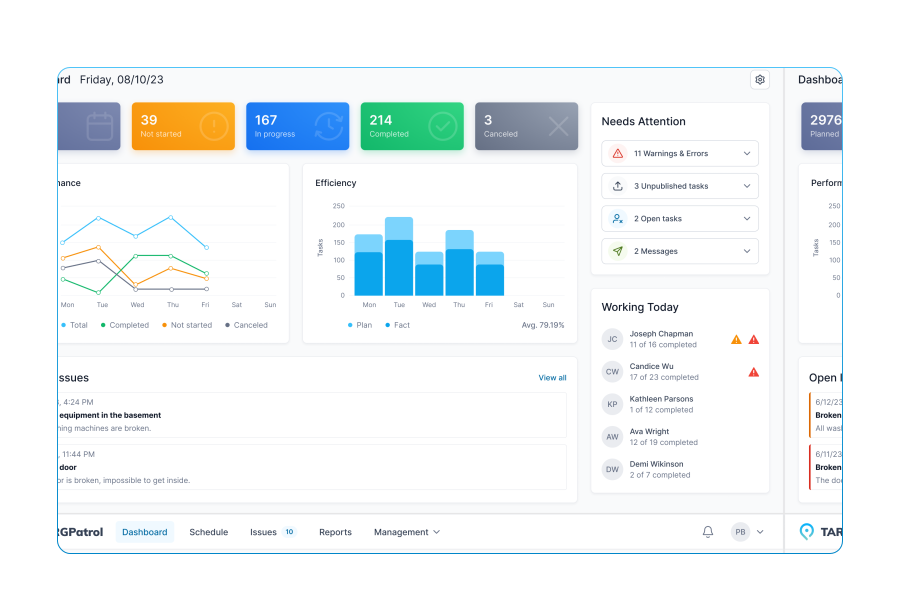
A cloud-based work order software designed to streamline inspections and task management across diverse service areas, enhancing operational efficiency and productivity.
Try now for FREE
TARGPatrol promo