Manufacturing
 10/1/2025
Excavator Pre-start Checklist for Daily Maintenance
An Excavator Pre-Start Checklist turns “give it a quick look” into a consistent, shift-by-shift routine that operators and maintenance can follow the same way every day. It begins with safety and compliance — operator fit for duty, required PPE on, fire extinguisher present, manuals and permits on hand — so the machine is safe to start before anyone turns the key.
Inside the cab, the operator confirms the seat belt latches, mirrors/cameras and HVAC/defogger are set, and the display shows no active fault codes. Controls are labeled and responsive. A short no-load function test closes the loop: smooth start, stable idle, and clean throttle response; boom, stick, and bucket cycle without jerks or unusual noise; swing brakes properly; travel forward/reverse and the park brake hold as expected. Any abnormal vibration, hot spot, or warning is captured immediately with a note, photo, or meter reading so the issue becomes planned maintenance — not unplanned downtime.
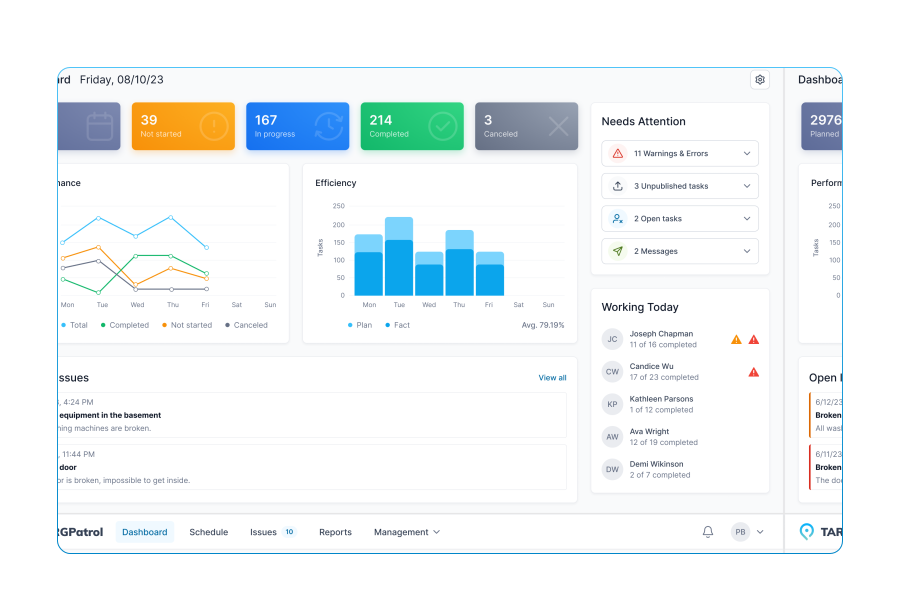
Use the format that fits your sites. Print the PDF for clipboards and low-signal zones, or run a mobile version to time-stamp checks, attach before/after photos of couplers and hoses, and open maintenance tickets on the spot. Review and refine the checklist quarterly — update limits from the OEM manual, add new attachments, and remove steps that don’t add value. A short, current pre-start routine keeps excavators safe, predictable, and ready to hit productivity targets.

Required PPE worn (helmet, glasses, gloves, safety boots)

Daily inspection log available, last entry up to date
Operator’s manual and load charts on machine
No visible damage, cracks, or loose panels on boom/stick/house
Handrails, steps, guards, mirrors intact and secure
Counterweight secure, slew ring area clear of debris
Undercarriage clean, no packed mud/debris restricting travel
Track tension within spec (or tires: tread OK, pressure within spec)
Upload wide photo of machine (left/right side)

No leaks under machine
Engine oil, coolant, hydraulic oil levels within spec
Fuel level sufficient for shift, DEF/AdBlue level OK (if applicable)
Hoses/fittings free of abrasion, bulges, or rub points
Battery connections tight, no corrosion
Work lights, beacon, horn, and backup alarm operational
Fire extinguisher present, charged, and accessible
Cab clean, seat adjusted, seat belt undamaged and latches
Display free of fault codes/warnings at startup
Wipers/washer, HVAC/defogger operational
Mirrors/cameras adjusted, visibility adequate
Engine starts smoothly, idle/acceleration normal, no abnormal smoke
Boom, stick, bucket cycle smooth, no unusual noises/vibrations
Travel forward/reverse and steering respond correctly, park brake holds
Test hydraulic safety/relief and emergency stop
Work area inspected, underground/overhead hazards identified
Ground bearing and access routes assessed, ramps stable
Note defects found / parts removed from service (tag-out initiated)

























Mobile Work Order Management Software for Business Maintenance