Manufacturing
 3/19/2026
British Safety Council Five Star Audit Checklist
The British Safety Council Five Star Audit Checklist is a comprehensive framework designed to evaluate the maturity, effectiveness, and consistency of an organization’s health and safety management system. Built around internationally recognized best practices, it goes beyond basic compliance and focuses on how safety is embedded into leadership, operations, and workplace culture.
This checklist covers the full safety lifecycle: from leadership commitment and policy alignment to risk assessment, operational control, incident management, and continuous improvement. It assesses not only whether procedures exist, but how effectively they are implemented in real working conditions. Particular emphasis is placed on proactive risk management, employee engagement, and measurable performance indicators.
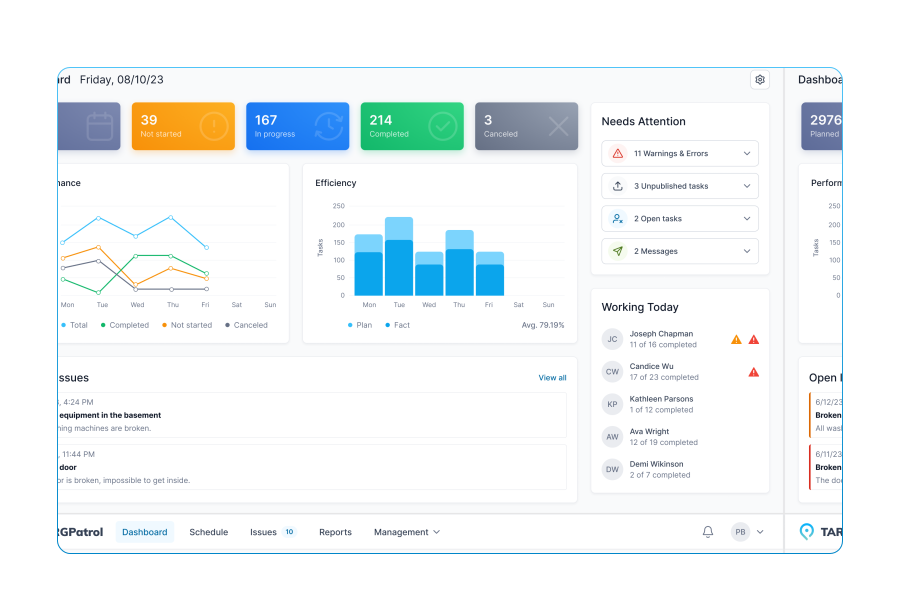
In digital formats (such as TARGPatrol), the checklist enables real-time data capture, photo evidence, automated scoring, and centralized reporting—making it significantly more effective for maintaining Five Star standards across multiple sites.

Health & Safety policy documented, signed by senior leadership

Policy communicated to all employees and contractors
Clear H&S objectives and KPIs defined
Roles and responsibilities formally assigned
Leadership demonstrates visible commitment (walkthroughs, meetings)
H&S integrated into business strategy and operations
Formal risk assessments conducted for all activities
Risk assessments reviewed periodically
Hazard identification process in place
Hierarchy of controls applied (elimination → PPE)
Safe systems of work documented
Dynamic risk assessments used where applicable
Control measures clearly communicated to staff
Register of applicable legislation maintained
Compliance audits conducted regularly
Permits/licenses valid and up to date
Evidence of compliance with local and international standards
Legal updates tracked and implemented
H&S induction for all employees
Role-specific training completed and documented
Competency matrix maintained
Refresher training schedule in place
Contractors assessed for competence
Employees aware of hazards and controls
Safety meetings conducted regularly
Toolbox talks implemented
Employees involved in risk assessments
Near-miss reporting system in place
Feedback mechanisms available (suggestions, reports)
Safety culture actively promoted
SOPs (Standard Operating Procedures) documented
Permit-to-work system implemented (hot work, confined space)
Lockout/Tagout procedures enforced
Housekeeping standards maintained
Traffic management plan in place
Safe material handling procedures defined
Equipment inspected regularly
Preventive maintenance schedule followed
Machine guarding installed and functional
Emergency stop systems tested
Calibration records maintained
Only authorized personnel operate machinery
Adequate lighting levels
Ventilation systems operational
Noise levels monitored and controlled
Temperature within safe limits
Cleanliness and hygiene standards maintained
Slip/trip hazards controlled
Health surveillance programs in place
Exposure monitoring (dust, chemicals, noise)
Ergonomic assessments conducted
Stress and mental health programs available
First aid provision adequate
Medical records maintained confidentially
Incident reporting procedure documented
All incidents recorded and investigated
Root cause analysis conducted
Corrective actions tracked to completion
Near misses analyzed
Lessons learned communicated
Emergency response plan documented
Fire risk assessment completed
Fire detection and suppression systems tested
Emergency exits clearly marked and unobstructed
Evacuation drills conducted
First responders trained
Contractor onboarding includes H&S requirements
Contractor risk assessments reviewed
Contractor performance monitored
Permit-to-work applied to contractors
Supplier safety standards evaluated
Leading indicators tracked (near misses, audits)
Lagging indicators tracked (injuries, incidents)
Internal audits conducted regularly
Management reviews performed
Benchmarking against industry standards
Document control system in place
Records stored securely and accessible
Version control applied to procedures
Audit trails maintained
Digital systems used for reporting (if applicable)
Corrective & preventive actions tracked
Improvement plans defined and reviewed
Innovation in safety practices encouraged
External audits or certifications pursued
Lessons learned integrated into processes
Overall compliance score [%]

Critical risks identified

Immediate actions required
Improvement opportunities






















Mobile Work Order Management Software for Business Maintenance