TARGPatrol
Checklists LibraryCoast Guard Boat Safety Checklist
Security Guard ServicesSecurity Guard Services
Date icon8/20/2025

Coast Guard Boat Safety Checklist

A Coast Guard Boat Safety Checklist is a captain’s shortcut to a hassle-free inspection and, more importantly, a safe voyage. Instead of hoping that registration papers are current or that every life jacket is serviceable, the checklist walks crew through a fixed sequence — documents, flotation gear, distress signals, fire equipment, navigation lights, mechanical checks, pollution controls, deck integrity, and a final crew briefing.


Because the list is organised in the same order inspectors use, completing it before every departure saves time at the dock and reduces the risk of fines, voyage delays, or failed safety drills. Captains can clip the free PDF to a bulkhead for quick pen-and-tick use, then file the sheet in the logbook as proof of compliance. Larger fleets often load the template into a mobile safety-management app, where crews time-stamp each step, attach photos of HIN plates or extinguisher gauges, and sync the report to shore staff for real-time oversight.


The checklist also standardises maintenance routines. Weekly run-throughs reveal cracked fuel lines or dead navigation bulbs before they become mid-channel breakdowns. Quarterly archive files give owners a clear service history — useful for insurers, surveyors, and resale negotiations. If the vessel’s gear list changes (for instance, switching to inflatable PFDs or adding AIS), updating the template takes minutes, keeping the routine aligned with the latest Coast Guard regulations.


Whether you skipper a weekend runabout or manage a charter fleet, a Coast Guard Boat Safety Checklist turns scattered “don’t forget” notes into one reliable routine — protecting passengers, meeting legal requirements, and letting everyone focus on enjoying the water instead of worrying about paperwork.


Coast Guard Boat Safety Checklist
0/40

Certificate of Number / State Registration on board

Check

Hull Identification Number (HIN) plate legible

Check

Federal documentation (if applicable) present

Check

Captain’s license or state boating card valid

Check

List any paperwork expiring within 30 days

Text

Wearable Type-I/II/III life jackets in good condition

Check

Count total serviceable PFDs

Number

Throwable Type-IV device on deck and accessible

Check

Flares / visual distress signals in-date (pcs)

Number

Day/night signals stored in dry container

Check

Electric distress light operational

Check

Upload photo of flare expiry dates

Media

Type B-I/II extinguishers charged (count)

Number

Extinguisher mounting brackets secure

Check

Fixed engine-room system inspection tag current

Check

Note extinguishers needing service

Text

Navigation lights tested (all colors correct)

Check

VHF radio power-on check with radio check channel

Check

GPS / chart-plotter acquiring satellites

Check

AIS transmitting (if installed)

Check

Upload screenshot of electronic chart display

Media

Count spare fuses in nav-panel kit

Number

Engine-oil level within range

Check

Cooling-water intake strainers clear

Check

Fuel lines free of cracks, dated < 5 yrs

Check

Bilge pump auto-float switch cycles correctly

Check

Fuel tank vent screens unobstructed

Check

Describe any fluid leaks observed

Text

Deck clear of trip hazards and loose gear

Check

Railings and lifelines secure

Check

Scupper / drain holes unobstructed

Check

Hull free of obvious cracks or blisters

Check

Upload wide-angle photo of deck condition

Media

Safety briefing delivered (PFD use, muster, VHF call)

Check

Count total persons aboard today

Number

Note special-needs passengers or pets

Text

Weather and sea state checked

Check

Float plan filed with marina or contact

Check

Time of departure logged (24-hr)

Number

Additional remarks for next inspection

Text
Similar checklists
Security Guard Patrolling Checklist
Security Guard ServicesSecurity Guard Services
Date icon8/20/2025

Security Guard Patrolling Checklist

A Security Guard Patrolling Checklist turns a long shift into a series of quick, verifiable actions. Instead of walking the grounds from memory, an officer moves through a list that starts with a gear check and ends with the last padlock at the gate. In between come timed perimeter passes, interior sweeps, visitor-badge counts, alarm-panel checks, and system tests. Each line spells out the success criterion — “gate set to night-lock,” “server room door locked,” “panic button test recorded” — so there’s no debate about what finished means. For building owners and contract-security firms, the document builds a solid record. Paper versions carry signatures and time stamps; digital templates in guard-management software add QR codes, GPS pings, and photo uploads. A picture of a damaged hinge or a blocked exit lands in the maintenance queue before it becomes a safety breach, and a map view shows management that every checkpoint was hit on schedule. Guards like the predictability. A pre-shift section confirms radio batteries and reviews the last incident log; mid-shift loops break large properties into smaller runs so no stairwell or loading dock is skipped. The checklist also backs up shift exchanges: key returns, and logbook notes are right there, preventing loose ends when the next officer clocks in. Because sites change, the list is meant to evolve. New camera zones, seasonal lighting, or temporary construction areas can be added in minutes — no need to rewrite the entire manual. Update once a quarter and the patrol routine stays lean, compliant, and matched to today’s risks.

TARGPatrol
Night Patrolling Security Checklist for Guards
Security Guard ServicesSecurity Guard Services
Date icon8/20/2025

Night Patrolling Security Checklist for Guards

A Night Patrolling Security Checklist is a guard’s road map through the riskiest hours of the day. Instead of walking the site from memory, the officer follows a timed sequence: gear checks, first perimeter sweep, interior rounds, high-risk area inspections, random QR/NFC scans, and a final lock-down before hand-off. Every line spells out a clear result, so there’s no debate about what “done” means when supervisors review the log. Because the tasks are arranged in the same order most insurers and clients expect, guards can complete a full tour without doubling back or missing blind spots. The printed PDF version clips easily to a clipboard for low-tech facilities, while the app template adds GPS pings, photo uploads, and instant incident tickets. That real-time data lets supervisors verify that rooftop doors, loading docks, and server rooms were checked on schedule — no need for late-night calls or second shifts. For security firms, the checklist standardises labour hours and reduces callbacks. QR scans and GPS stamps prove patrols happened, which is invaluable when a client questions billing or an insurer asks for documentation after a break-in. Property managers benefit too: maintenance issues such as broken lights or leaking pipes are flagged during patrols, often before tenants notice. Best of all, the document is easy to update. Add a new camera zone, change an access schedule, or remove a temporary construction area in minutes — then print fresh copies or push the update to the app. The result is a patrol routine that stays tight, auditable, and perfectly aligned with each night’s evolving risks.

TARGPatrol
Checklist for Security Guard
Security Guard ServicesSecurity Guard Services
Date icon8/20/2025

Checklist for Security Guard

A Security Guard Checklist is a practical script that guides officers through an entire shift, from the moment they clock in to the last perimeter sweep. Instead of relying on memory or scattered notes, guards follow a clear series of tasks — gear inspection, perimeter walk, interior patrol, system checks, incident reporting, and end-of-shift hand-off — each with a simple “done” standard. That structure keeps coverage consistent and lets supervisors verify that every entry door, camera feed, and alarm panel was actually checked. For guards, the checklist removes uncertainty. Pre-shift questions — “Is my radio charged? Did I review last night’s incident log?” — are right at the top, so they start the round fully prepared. During patrols, the document breaks large areas into smaller checkpoints (fence line, stairwells, server room), reducing the chance of skipping a blind spot. Space for quick notes and license plates means critical details are captured while they’re fresh, not scribbled hours later. Property managers and contract-security firms gain an audit trail. A signed paper sheet or time-stamped mobile entry proves that required patrols happened on schedule and that keys, badges, and visitor logs are accounted for — important when insurance claims or compliance audits arise. Optional photo uploads (e.g., a damaged gate or blocked fire exit) let managers act on maintenance issues before they balloon into liability. The checklist is available as a printable PDF — ideal for low-tech sites — or as a digital template in a security app, where tasks trigger reminders and incident forms auto-populate. Whichever format you choose, treat it as a living document: update it when new cameras go live, when entry schedules change, or when a client adds EV-charging bays to the parking lot. A few quick edits keep your security routine tight, verifiable, and ready for any shift.

TARGPatrol

Mobile Work Order Management Software for Business Maintenance
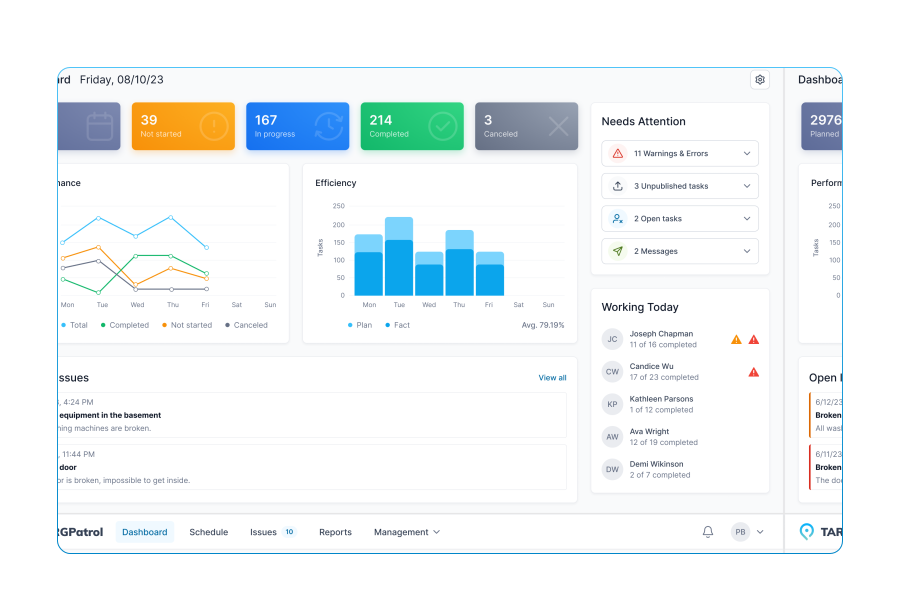
A cloud-based work order software designed to streamline inspections and task management across diverse service areas, enhancing operational efficiency and productivity.
Try now for FREE
TARGPatrol promo