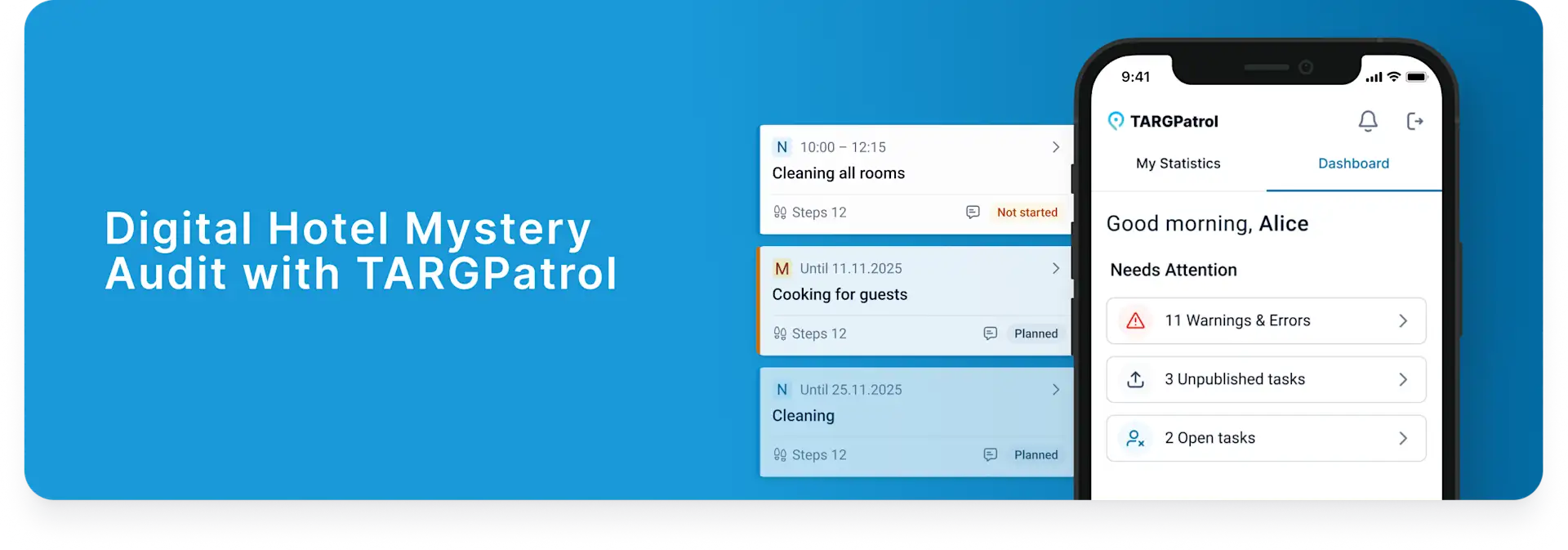
Digital Hotel Mystery Shopper Audit
How Hotels Control Service Quality
Hospitality is one of the industries where service quality directly impacts revenue, reputation, and guest loyalty. Two hotels with similar rooms, prices, and locations can perform very differently depending on how consistently their staff deliver service.
Hotels typically try to control service quality through several mechanisms:
📋 service standards and operating procedures
🎓 staff training programs
⭐ guest feedback and online reviews
👨💼 managerial supervision
However, these methods have a major limitation: employees know when they are being evaluated. When inspections are expected, behavior changes — meaning management sees a polished version of service rather than the real guest experience.
This is why many hotels use Hotel Mystery Shopping, also known as Mystery Guest services.
A mystery guest behaves like a normal guest but evaluates the hotel against predefined service standards. The visit produces a structured report covering the entire guest journey:
reservation and pre-arrival communication
arrival and reception experience
room quality and housekeeping
restaurant and food service
staff behavior and problem handling
Because employees do not know when the evaluation happens, the results reflect the real operational level of the hotel.
What Should Be Evaluated During a Mystery Audit in Hotels
Professional mystery guest programs evaluate the entire guest journey — from reservation to departure. Instead of focusing on isolated interactions, they analyze how consistently the hotel delivers service across key touchpoints.
1. Reservation and Pre-Arrival
The guest experience begins before arrival. Mystery guests evaluate how efficiently the hotel manages reservations across phone, email, or online channels.
Key aspects include:
response time to calls or emails
professionalism of reservation staff
knowledge of rooms, services, and policies
ability to recommend upgrades or packages
Hotels also check whether reservation confirmations are accurate and whether special requests are recorded correctly.
2. Arrival and First Impression
First impressions strongly influence overall guest satisfaction. The mystery guest evaluates how welcoming and organized the arrival process feels.
Typical evaluation areas include:
entrance condition and cleanliness
greeting by reception staff
waiting time at reception
appearance and professionalism of employees
explanation of hotel services and facilities
In high-end hospitality, this moment determines whether the hotel delivers a true premium welcome experience.

3. Room Quality and Housekeeping
The room remains the core product of the hotel. Mystery guests inspect the room using clear service standards.
Typical checks include:
overall cleanliness of the room
bathroom hygiene
bed preparation and linen condition
functionality of lighting and equipment
availability of amenities
Room condition is one of the most important factors influencing guest satisfaction and online reviews.
4. Restaurant and Food Service
Food & beverage service is a key part of the hotel experience and often a major revenue source.
Mystery guests typically evaluate:
greeting and seating process
waiter knowledge of the menu
food delivery time
presentation and quality of dishes
cleanliness of tables and service areas
Breakfast service, room service, and dietary request handling are also important elements.
5. Handling Requests and Problems
A professional mystery guest evaluation also tests how the hotel responds to requests or small problems. For example, the guest may request extra amenities, report a room issue, ask for concierge assistance.
The evaluation focuses on:
response time
staff attitude
problem-solving ability
follow-up communication
Hotels that resolve issues quickly often turn potential complaints into positive guest experiences.
How to Run a Digital Hotel Mystery Audit with TARGPatrol
Traditional mystery guest programs often rely on narrative reports, spreadsheets, and delayed follow-up. That creates a familiar problem in hotel operations: standards exist, inspections happen, but execution is inconsistent and corrective action is slow.
With TARGPatrol, service standards are no longer managed as static documentation. They are managed as a closed-loop operating system:
🛡 Prevent — standards are executed on schedule, with proof rules
🔍 Detect — deviations are captured immediately, with evidence
🛠 Correct — failures automatically create tasks with owners, SLAs, and reminders
✅ Verify — closure requires “after” proof, such as a new photo or re-check
📈 Improve — dashboards reveal recurring issues, weak zones, and training gaps
This is exactly the model a high-standard hotel operation needs: fast feedback, hard evidence, and accountability.
What TARGPatrol Changes Operationally
Instead of collecting mystery guest observations as isolated reports, hotels can run a repeatable digital workflow:
Schedule = when, where, and by whom the audit is performed
Checklist = what is checked, how it is evaluated, and what proof is required
This separation is important for scaling across multiple hotels, departments, and audit scenarios. A hotel group can standardize one mystery guest checklist template, while assigning it by property, zone, shift, or evaluator.
Key TARGPatrol Functions for Hotels
📷 Evidence-based proof per checklist item
Each checklist item can require:
photo or video proof
written notes or comments
numeric values where needed
optional live-shot only mode, without gallery uploads
Instead of “room was clean,” management gets verifiable evidence.
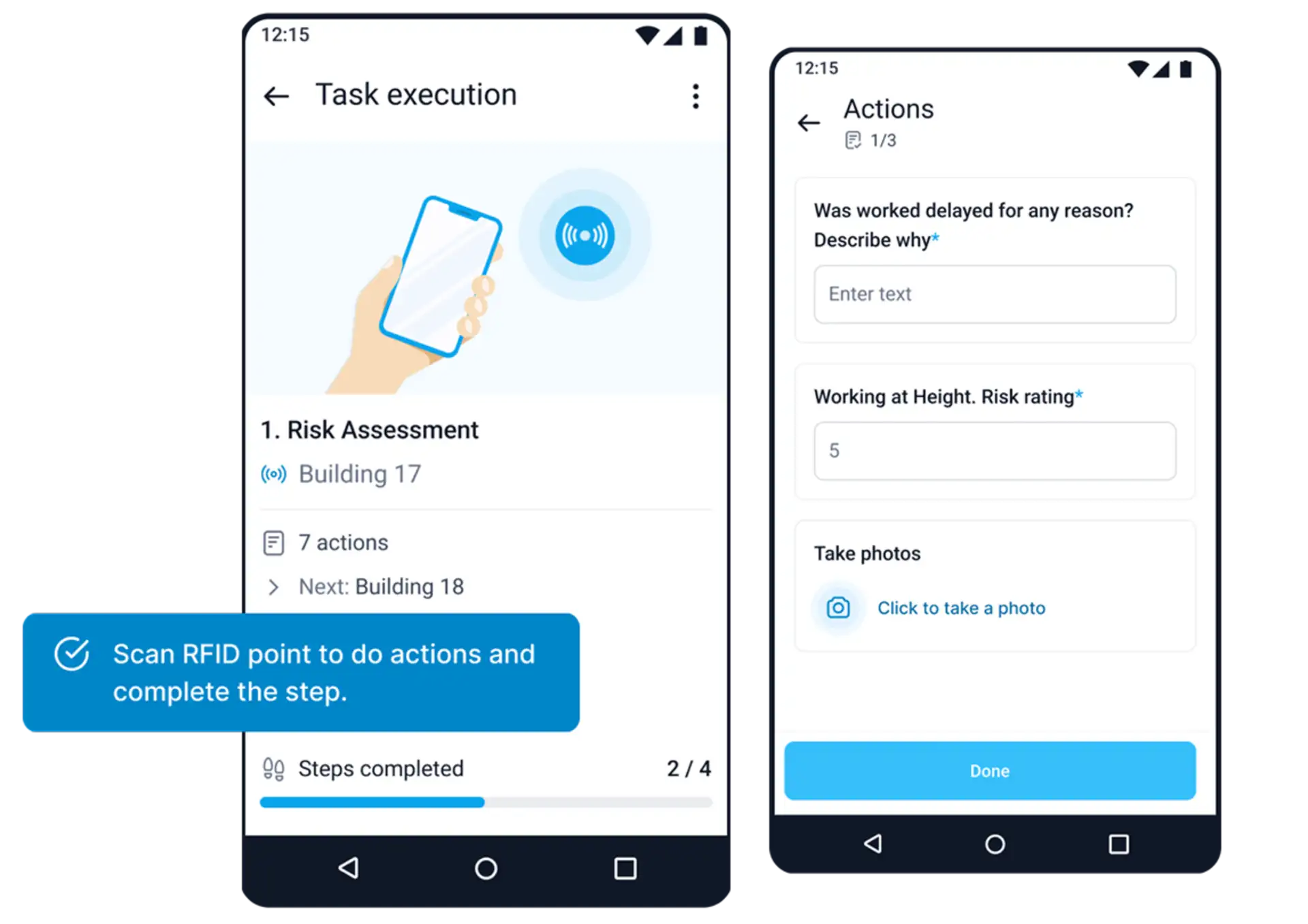
📍 Time and location control
TARGPatrol helps ensure that checks are completed in the right place and at the right time through:
GPS and geofence confirmation
timestamps on every action
QR or NFC tags for exact checkpoint validation
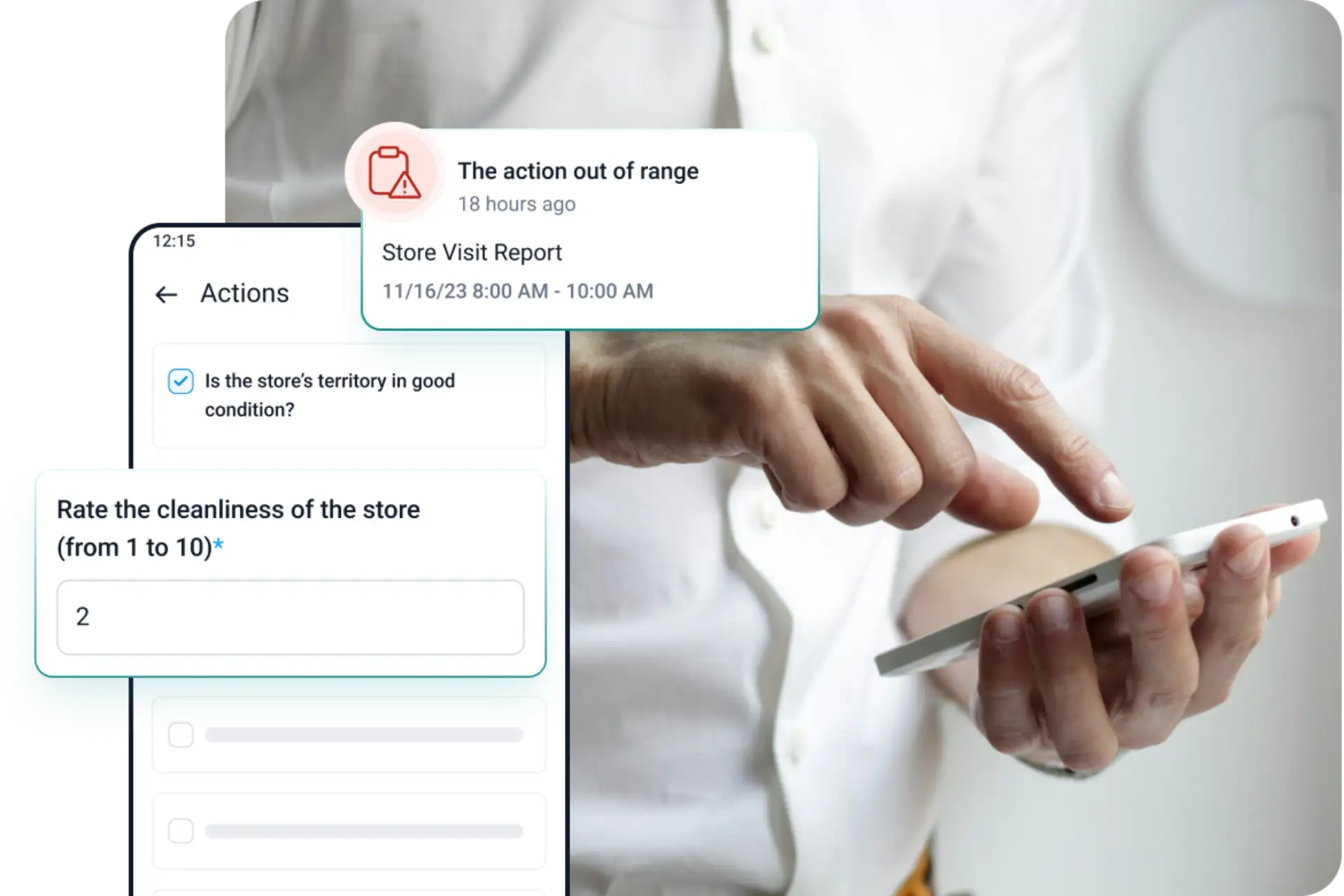
🔔 Automatic escalation and corrective action
A failed mystery guest item does not stay inside a report. It can automatically become a corrective task with:
assigned owner
SLA / due date
reminders and follow-up tracking
mandatory “after” proof before closure
So if the mystery guest identifies poor room preparation, missing amenities, or a service failure at reception, the issue can immediately enter an execution workflow instead of waiting for manual follow-up.
📊 Live manager dashboard
Managers get real-time visibility into operational quality, including:
audit completion status
overdue corrective actions
recurring failures
coverage across properties or service areas
This turns mystery guest evaluations from periodic control into continuous service quality monitoring.
Digital Checklists for Hotel Mystery Audits
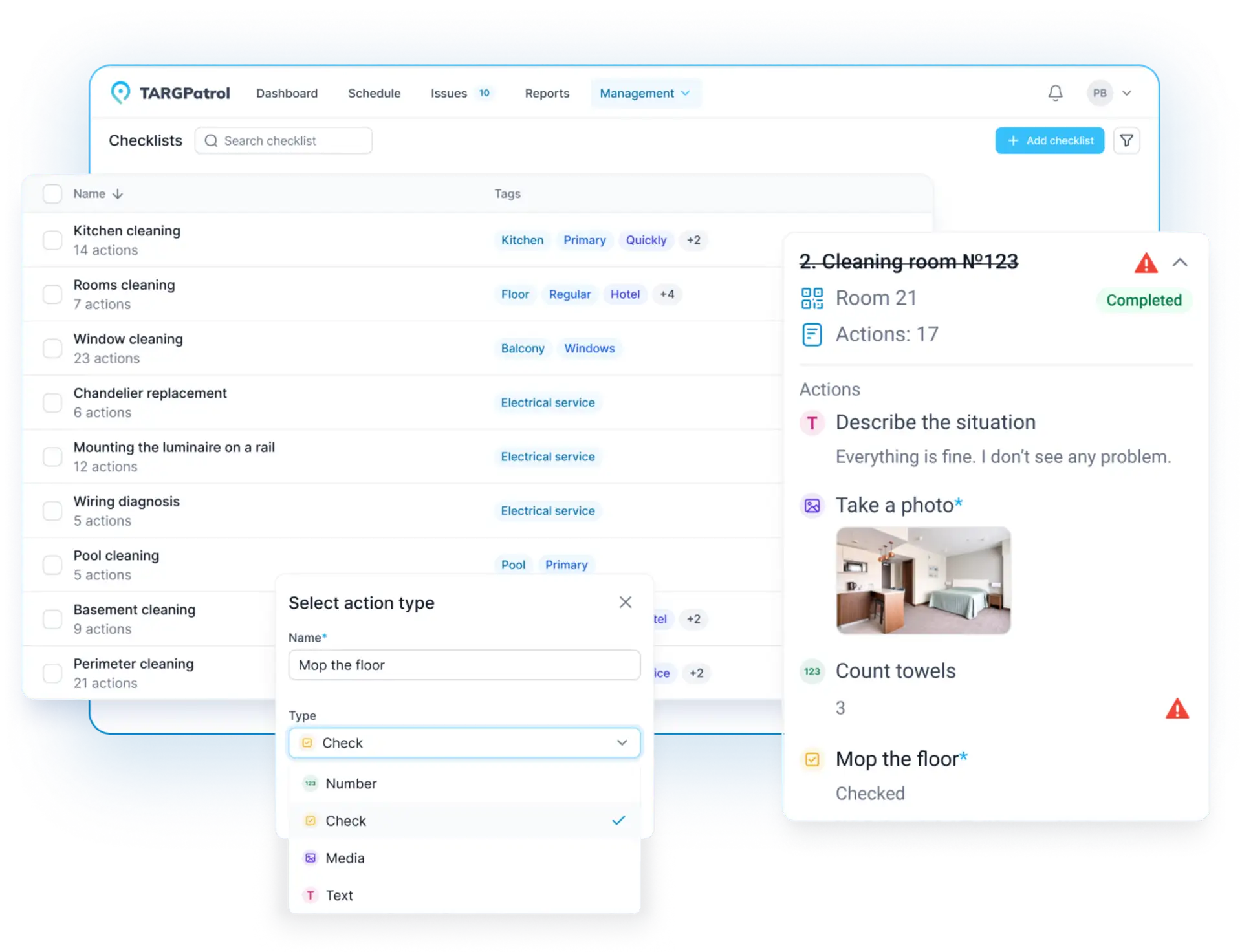
TARGPatrol uses structured digital checklists to standardize inspections, audits, and mystery guest evaluations across hotel operations. The system supports four core checklist item types that cover most hospitality workflows:
✔ [Checkbox] — pass/fail evaluation
🔢 [Number] — numeric readings with tolerances or thresholds
📷 [Media] — photo or video evidence
📝 [Text] — comments, notes, IDs, or explanations
This structure allows hotels to evaluate service standards consistently while collecting objective evidence.
For critical steps, hotels can also apply proof rules. For example, a checklist item may require a photo before a failed inspection can be submitted, or require an “after” photo before a corrective task can be closed.
TARGPatrol also supports place and time validation. Evaluators may need to scan a QR or NFC checkpoint or be physically present within a geofenced area before completing certain checklist steps. This ensures that inspections actually happen in the required locations.
Most importantly, deviations automatically generate tasks. Failed checklist items do not remain passive observations — they create corrective actions with owners, deadlines, and follow-up verification.
Checklist Library in TARGPatrol
In addition to custom checklists, TARGPatrol provides a library of ready-to-use hospitality templates that hotels can deploy immediately or adapt to their internal standards.
The library includes operational checklists for key hotel processes such as:
🧹 Housekeeping and cleaning inspections
🏨 Guest room preparation and quality checks
🍽 Restaurant and breakfast service audits
🛎 Front desk and guest service standards
⭐ Service standard compliance audits
These templates provide a structured starting point for hotels that want to implement operational audits quickly without building checklists from scratch.
📋 Explore the full library of hotel operations checklists and download ready-to-use templates — Checklist Library.
Because checklists are fully customizable, hotels can adapt them to brand standards, service level requirements, or international hospitality guidelines.
Combined with scheduling, task automation, and real-time reporting, the checklist library allows hotels to build a consistent operational quality framework across departments and properties.
Conclusion
Ensuring consistent service quality in hotels is challenging because hospitality operations involve hundreds of guest interactions every day.
Traditional supervision methods cannot fully capture the real guest experience. Mystery guest programs provide an effective solution by evaluating service from the perspective of a real guest.
When combined with digital tools such as TARGPatrol, these programs become significantly more powerful.
Hotels can:
📊 standardize service evaluations
📸 collect photo evidence of issues
⚡ receive real-time inspection reports
📈 analyze service performance across locations
As a result, mystery guest programs evolve from occasional audits into a continuous service quality management system.
For hotel operators, this means better visibility, faster corrective actions, and ultimately more consistent guest experiences and higher service ratings.